
Elderly Care Robots Reviews & Buying Guide
Elderly care robots can help seniors, caregivers, and families with safer aging in place, medication reminders, fall detection, home monitoring, companionship, caregiver communication, smart home support, telepresence, healthcare reminders, and daily routines. This hub organizes every major elderly care robot guide so you can compare the best robots and smart devices for seniors living at home.
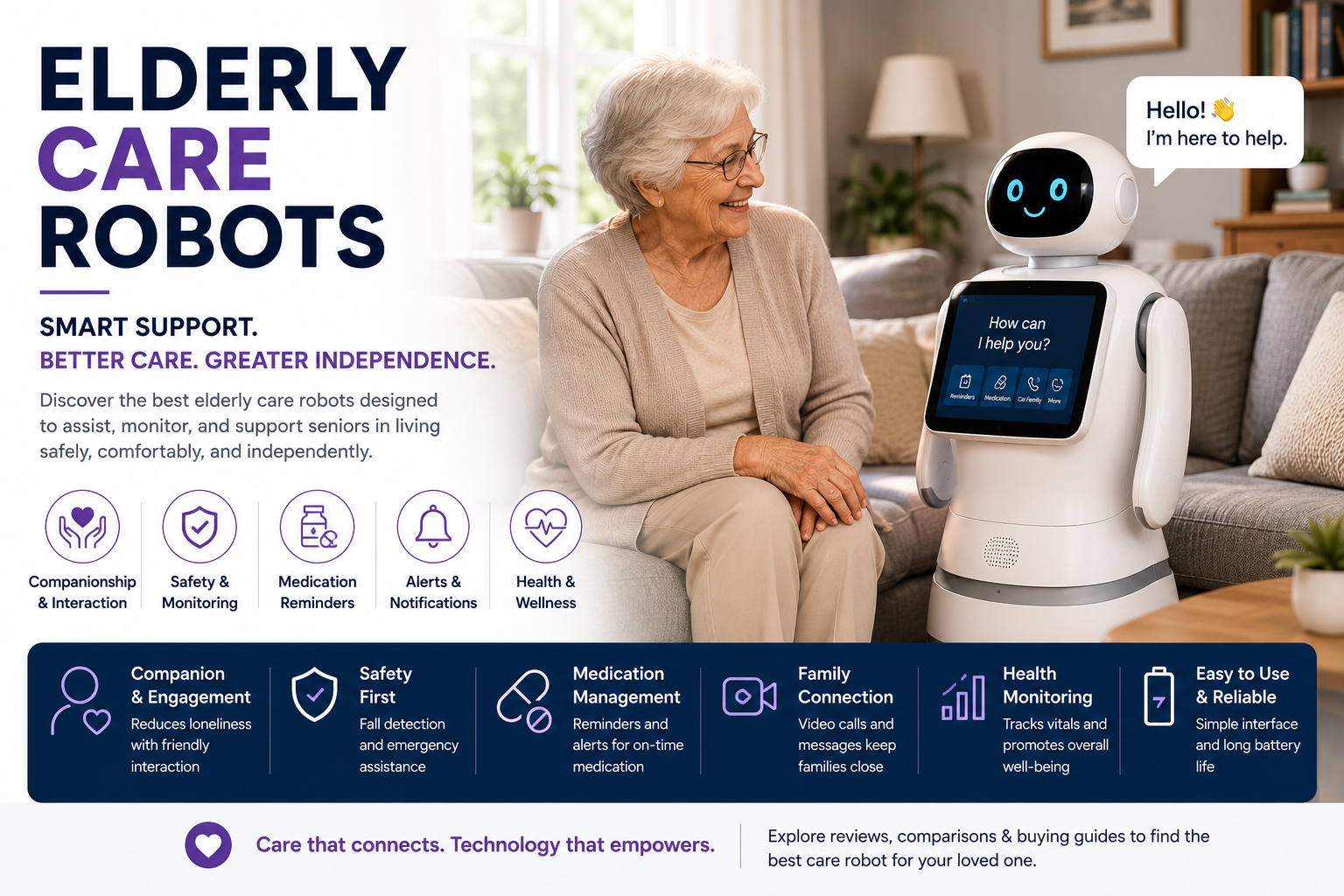
What Are Elderly Care Robots?
Elderly care robots are robots and smart home devices designed to support seniors with daily living, reminders, monitoring, communication, companionship, emergency awareness, and independent living. They can include companion robots, healthcare robots, medication reminder robots, monitoring robots, fall detection devices, telepresence robots, home assistant robots, and smart home systems for elderly people living alone.
The elderly care robot category is not one single product type. A senior who needs medication support may need a smart pill dispenser or reminder robot. A senior living alone may need monitoring, fall detection, or caregiver alerts. A senior who feels lonely may benefit more from a companion robot. A family supporting an aging parent from far away may need telepresence, smart home alerts, or remote check-ins.
The best elderly care robot depends on the real daily need, the senior’s comfort with technology, caregiver involvement, privacy preferences, medication routine, fall risk, home layout, hearing and vision needs, and whether the goal is safety, companionship, healthcare support, or aging in place.
Important: Elderly care robots can support daily routines and caregiver awareness, but they do not replace doctors, caregivers, emergency services, medication instructions, or professional medical advice.
Best Elderly Care Robot Guides
Best Robots for Elderly People Living at Home
Start here for a broad overview of senior care robots, smart home devices, monitoring tools, companion robots, and home support systems.
Best Companion Robots for Seniors
Companion robots can support conversation, reminders, engagement, routine prompts, entertainment, and emotional connection.
Best Monitoring Robots for Elderly People
Monitoring robots and smart home monitoring systems can help caregivers check in, observe activity, and support independent living.
Best Fall Detection Devices for Seniors
Fall detection tools can help notify caregivers or emergency contacts when a fall may have occurred.
Best Medication Reminder Robots
Medication reminder robots and smart pill dispensers can help organize daily pill routines and missed-dose alerts.
Elderly Care Robot Buying Guide
Use the buying guide to choose the right care robot by medication needs, fall risk, monitoring, companionship, privacy, and caregiver support.
Elderly Care Robot Types Compared
| Care Robot Type | Best For | Main Benefit | Possible Limitation |
|---|---|---|---|
| Medication Reminder Robot | Daily pill routines and missed-dose concerns | Helps remind seniors when to take medication | Does not replace medical supervision |
| Smart Pill Dispenser | Multiple medications and complex schedules | Organizes doses by time and may limit wrong-time access | Must be refilled correctly |
| Companion Robot | Loneliness, engagement, reminders, daily prompts | Feels more interactive than a simple speaker | Does not replace human connection |
| Monitoring Robot | Seniors living alone and remote caregivers | Supports check-ins, activity awareness, and caregiver peace of mind | Privacy and camera comfort matter |
| Fall Detection Device | Seniors at risk of falling | Can alert caregivers after a possible fall | No fall detection system is perfect |
| Healthcare Robot | Routine health support, reminders, wellness prompts | Can support aging in place and daily health routines | Should not replace doctors or caregivers |
| Telepresence Robot | Remote family visits and caregiver communication | Allows more personal check-ins than a phone call | Can be expensive or require setup |
| Smart Home Devices for Seniors | Independent living, lights, reminders, cameras, alerts | Often affordable and easy to combine | May require Wi-Fi and app management |
Elderly Care Robot Supporting Articles
How to Choose the Right Elderly Care Robot
Start With the Main Need
Do not start with the flashiest robot. Start with the real problem. Is the senior missing medication? Falling or at risk of falling? Living alone? Feeling isolated? Needing caregiver check-ins? Struggling with appointments or routines? The best product depends on the primary need.
Match the Senior’s Tech Comfort
A complicated robot can fail even if it has great features. Seniors need clear prompts, simple controls, reliable charging, large buttons, readable screens, understandable alerts, and setup that caregivers can manage.
Consider Caregiver Involvement
Some elderly care robots work best when a caregiver sets them up, refills medication, checks alerts, reviews notifications, or manages app settings. Make sure someone can maintain the device long-term.
Review Privacy Carefully
Monitoring robots, cameras, microphones, motion sensors, caregiver apps, and cloud accounts can be useful, but they must be handled carefully. Seniors should understand what is being monitored when possible.
Check Emergency Features
Fall detection, emergency buttons, caregiver alerts, low-battery warnings, backup power, and contact notifications can be important for seniors living alone. Test these features before relying on them.
Understand Total Cost
Some systems have monthly monitoring fees, app subscriptions, cellular plans, replacement accessories, or cloud services. Compare total cost, not only the purchase price.
Best Elderly Care Robot by Use Case
For Seniors Living Alone
A combination of smart home devices, monitoring robots, fall detection, medication reminders, and caregiver communication may be better than one single robot.
For Medication Management
Medication reminder robots and smart pill dispensers are usually more useful than general companion robots when pill timing is the main concern.
For Fall Risk
Fall detection devices, wearable alerts, emergency buttons, and home monitoring systems should be prioritized when falls are the main concern.
For Loneliness and Engagement
Companion robots can help with conversation, reminders, routine prompts, entertainment, and emotional presence. They should complement real human contact.
For Remote Caregivers
Telepresence robots, home monitoring systems, caregiver alerts, and connected health devices can help families support a senior from another home or city.
For Smart Home Support
Smart speakers, smart displays, sensors, lights, cameras, reminders, and home assistant robots can support daily routines and make the home easier to manage.
Common Elderly Care Robot Buying Mistakes
- Buying too much technology: More features do not help if the senior will not use them.
- Ignoring the main care need: Medication, falls, loneliness, and monitoring require different devices.
- Skipping caregiver setup: Many devices need apps, alerts, charging, refilling, or regular checks.
- Forgetting privacy: Cameras and monitoring tools should be discussed and understood.
- Assuming robots replace caregivers: Robots can support care, but they do not replace human judgment.
- Ignoring monthly fees: Monitoring plans and subscriptions can affect long-term value.
- Not testing alerts: Emergency and caregiver alerts should be tested before relying on them.
- Choosing a companion robot for a safety problem: Fall risk should be handled with safety-first tools.
- Choosing a reminder device for a monitoring problem: Match the device to the actual need.
- Ignoring hearing, vision, or mobility needs: Alerts and controls must fit the senior’s abilities.
Are Elderly Care Robots Worth It?
Elderly care robots can be worth it when they solve a real daily problem. Medication reminder robots can support pill routines. Monitoring robots can help caregivers check in. Fall detection devices can improve emergency awareness. Companion robots can support engagement and daily prompts. Smart home devices can make routines easier.
They are not worth it when they are too complicated, too expensive for the benefit, uncomfortable for the senior, poorly matched to the need, or purchased without a plan for setup and follow-up.
For aging in place, elderly care robots work best as part of a larger support system that includes family, caregivers, healthcare professionals, emergency planning, home safety improvements, and simple daily routines.
Future of Elderly Care Robots
Elderly care robots are likely to become more important as more seniors age in place and families look for ways to support independence at home. Future care robots may combine AI assistants, medication reminders, caregiver alerts, fall detection, home monitoring, telepresence, wellness prompts, smart home control, and companion features.
The future of elderly care robots will not be about replacing family members, caregivers, doctors, or nurses. It will be about making home care more connected, more organized, more responsive, and easier to manage.
As AI home robots, healthcare robots, companion robots, personal assistant robots, telepresence robots, and home monitoring robots improve, elderly care robots may become one of the most important categories in home robotics.
Related Home Robot Guides
Elderly Care Robots FAQ
What is an elderly care robot?
An elderly care robot is a robot or smart device that supports seniors with reminders, monitoring, communication, companionship, safety alerts, or daily routines.
Are elderly care robots good for seniors?
They can be helpful when matched to the senior’s real needs, comfort level, caregiver support, and home environment.
Can elderly care robots help seniors live alone?
Yes, they can support aging in place with reminders, monitoring, caregiver alerts, fall detection, and communication tools.
Can elderly care robots remind seniors to take medication?
Some can. Dedicated medication reminder robots and smart pill dispensers are usually best for medication routines.
Can elderly care robots detect falls?
Some devices include fall detection, but no system is perfect. Emergency planning and caregiver support still matter.
Are companion robots good for seniors?
Companion robots can support engagement, reminders, routine prompts, and loneliness support, but they should complement human contact.
Can elderly care robots replace caregivers?
No. They can support care routines but do not replace caregivers, medical professionals, emergency services, or family involvement.
What is the best robot for elderly people living at home?
The best robot depends on the main need: medication reminders, fall risk, monitoring, companionship, or remote caregiver communication.
Do elderly care robots require Wi-Fi?
Many connected devices require Wi-Fi, apps, or cloud accounts. Some basic reminder devices may not.
Do elderly care robots have monthly fees?
Some devices have subscriptions for monitoring, cellular service, apps, storage, or emergency response features.
Are elderly care robots private?
Privacy depends on cameras, microphones, data storage, caregiver access, and app settings. Families should review these carefully.
Are robots good for elderly care?
They can be good support tools when they solve a real problem and are used with caregiver planning and professional guidance.
What features matter most?
Ease of use, caregiver alerts, medication support, fall detection, emergency features, battery life, privacy controls, and setup simplicity matter most.
Are smart speakers enough for elderly care?
Smart speakers can help with basic reminders, calls, and smart home control, but they may not replace specialized care devices.
Should I buy a care robot or fall detection device?
If fall risk is the main concern, prioritize fall detection. If companionship is the main concern, consider a companion robot.
Can elderly care robots help with dementia?
Some tools may help with reminders and routines, but dementia care should involve healthcare professionals and caregiver supervision.
Who should set up an elderly care robot?
A caregiver, family member, or responsible adult should help with setup, testing, alerts, charging, privacy, and maintenance.
Can elderly care robots call family?
Some companion robots, smart displays, telepresence robots, and monitoring systems support calls or caregiver check-ins.
What is the biggest buying mistake?
Buying a device that is too complicated or does not match the senior’s real daily need.
Should I ask a doctor before using an elderly care robot?
For medication, health monitoring, fall risk, or memory concerns, it is wise to involve a doctor, pharmacist, or healthcare professional.
Explore Elderly Care Robots
Elderly care robots can help seniors and caregivers with medication reminders, fall detection, home monitoring, companion support, telepresence, healthcare routines, emergency awareness, and smart home assistance. Compare elderly care robots, companion robots, medication reminder robots, monitoring robots, healthcare robots, fall detection devices, and smart home devices before choosing the best option for your family.
Shop Elderly Care Robots