
Best Robot Mops for Tile Floors Reviews
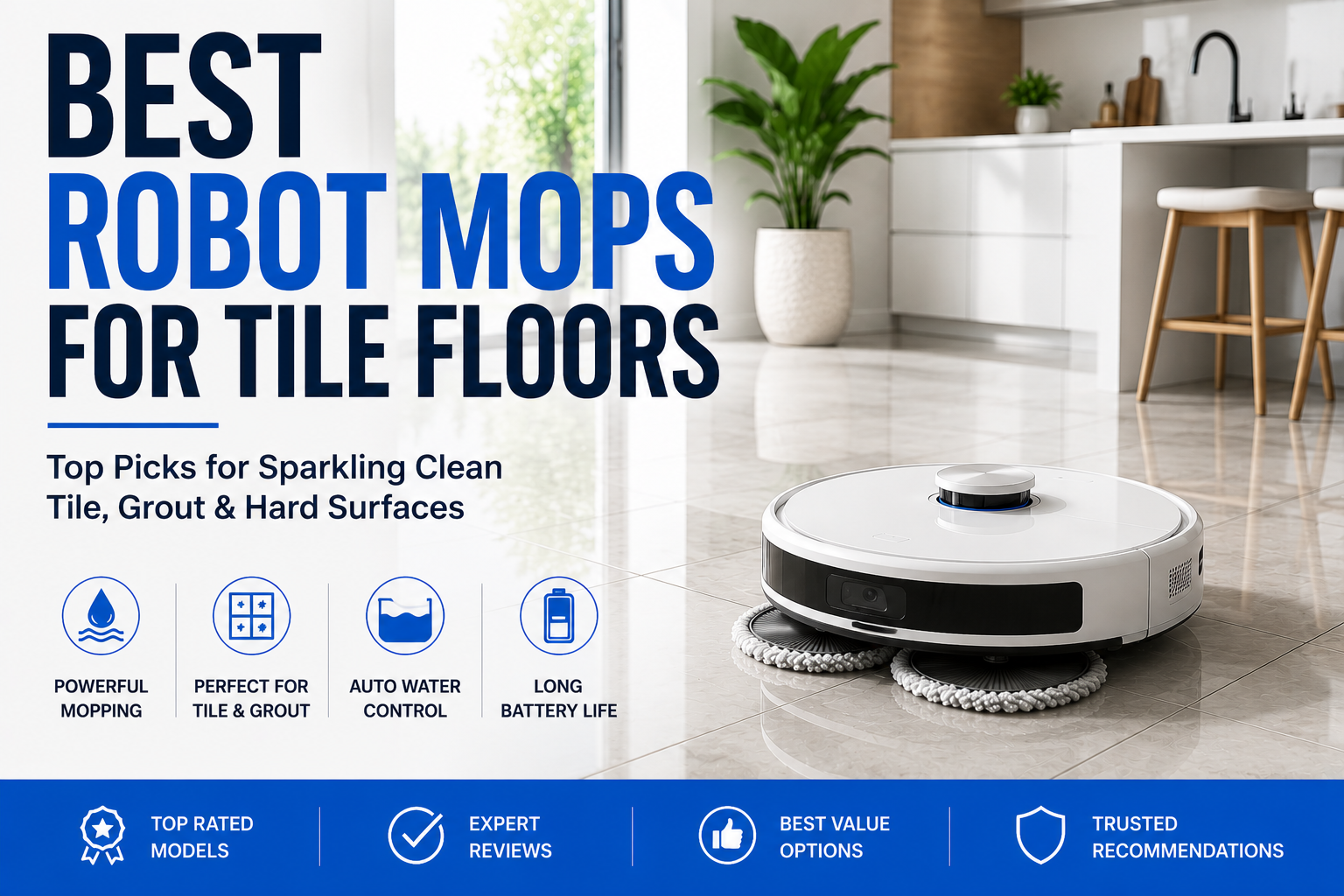
Tile floors are one of the best surfaces for robot mops. Kitchens, bathrooms, laundry rooms, entryways, and open living spaces often collect dust, footprints, spills, pet tracks, and sticky residue. A good robot mop can help keep tile floors cleaner between deep cleaning sessions. In this guide, we explain what to look for in the best robot mops for tile floors, including scrubbing power, smart mapping, water control, grout-line cleaning, mop pad design, and long-term maintenance.
Why Tile Floors Are Great for Robot Mops
Tile is usually more water-resistant than hardwood, laminate, and some vinyl floors. That makes it one of the easiest surfaces for robot mops to clean safely and effectively.
A robot mop can help remove surface dust, light stains, footprints, food residue, pet paw prints, and everyday messes from tile floors without requiring manual mopping every day.
What to Look for in a Robot Mop for Tile Floors
- Strong scrubbing action – helps clean sticky spots and dried residue
- Smart water control – keeps floors damp without oversaturating them
- Good navigation – prevents missed areas and repeated random cleaning
- Edge cleaning – helps clean along cabinets, walls, and baseboards
- Washable mop pads – reduces long-term replacement costs
- Auto mop washing – useful for larger tile areas and premium systems
Tile Floor Robot Mop Features Compared
| Feature | Why It Matters for Tile |
|---|---|
| Rotating Mop Pads | Can improve scrubbing on kitchen spills and sticky spots. |
| Vibrating Mop Pad | Helps loosen fine dirt and light dried residue. |
| Smart Mapping | Allows targeted cleaning for kitchens, bathrooms, and entryways. |
| Water Level Control | Lets you adjust moisture depending on the tile area. |
| Auto Wash Dock | Keeps mop pads cleaner during longer cleaning sessions. |
| No-Go Zones | Helps avoid rugs, mats, and delicate floor areas. |
Best Robot Mops for Kitchen Tile
Kitchen tile floors often need stronger mopping performance than other rooms. Food crumbs, grease residue, drink spills, and sticky footprints can build up quickly.
For kitchens, prioritize a robot mop with strong pad movement, targeted room cleaning, edge cleaning, and washable pads. If you also deal with crumbs and pet hair, a robot vacuum and mop combo may be a smart option.
Best Robot Mops for Bathroom Tile
Bathroom tile floors usually need frequent light cleaning due to moisture, dust, hair, and foot traffic. A robot mop can help maintain cleaner floors between deeper bathroom cleanings.
For bathrooms, compact size, good navigation, and controlled water flow are important. Always make sure the robot can safely navigate smaller rooms and avoid obstacles.
Best Robot Mops for Tile and Grout
Robot mops can help keep tile surfaces cleaner, but grout lines can be more difficult. Deep grout cleaning may still require manual scrubbing because grout sits lower than the tile surface and can trap dirt.
For better grout maintenance, choose a robot mop with strong scrubbing action, repeated cleaning passes, and good water control. Robot mops are best for keeping grout from getting worse, not necessarily restoring heavily stained grout.
Robot Mop vs Robot Vacuum and Mop Combo for Tile Floors
Tile floors work well with both dedicated robot mops and robot vacuum and mop combos. A dedicated robot mop may offer stronger mopping, while a combo machine can vacuum crumbs and mop in one routine.
If you are comparing both options, read our guide: Robot Vacuum and Mop Combo vs Separate Robot Mop.
SEE ROBOT MOPS FOR TILE FLOORSAre Robot Mops Worth It for Tile Floors?
Yes, robot mops are often worth it for tile floors because tile is durable, moisture-friendly, and commonly used in high-traffic spaces. A robot mop can reduce how often you need to manually mop kitchens, bathrooms, and entryways.
For a full value breakdown, visit our guide: Are Robot Mops Worth It?.
Robot Mops for Tile Floors with Pets
Pets can leave paw prints, drool, water bowl splashes, litter dust, and tracked-in dirt on tile floors. A robot mop can help maintain cleaner tile surfaces when paired with a good robot vacuum.
If pet hair is also a major issue, compare our guide to the best robot vacuums for pet hair.
Robot Mops for Large Tile Areas
Large kitchens, open-concept tile floors, and homes with tile throughout need better battery life, larger water capacity, smart mapping, and possibly auto mop washing.
If your home has a large floor plan, you may also want to compare our guide to the best robot vacuums for large homes.
Common Mistakes When Buying a Robot Mop for Tile
- Expecting the robot to deep-clean badly stained grout
- Choosing weak pad movement for sticky kitchen messes
- Ignoring water tank size
- Skipping smart mapping for multiple rooms
- Forgetting to wash mop pads regularly
- Buying a vacuum-only robot when mopping is the main need
Maintenance Tips for Tile Floor Robot Mops
- Wash or replace mop pads regularly
- Empty and rinse water tanks
- Clean sensors and wheels
- Use manufacturer-approved cleaning solutions only if allowed
- Check for debris trapped under mop plates
- Clean the dock if using an auto-wash system
For general robot cleaning maintenance, see our robot vacuum maintenance guide.
Best Overall Choice for Tile Floors
For most homes with tile floors, the best robot mop is one with strong scrubbing action, smart navigation, adjustable water levels, washable mop pads, and reliable app control.
If your home has both tile and hardwood, compare this guide with our article on the best robot mops for hardwood floors.
Related HomeBotGuide Articles
- Best Robot Mops
- Best Robot Mops for Hardwood Floors
- Robot Vacuum and Mop Combo vs Separate Robot Mop
- Are Robot Mops Worth It?
- Best Robot Vacuum and Mop Combos
- Best Robot Vacuums for Hardwood Floors
- Best Robot Vacuums for Pet Hair
- Best Self-Emptying Robot Vacuums
- Robot Vacuum Buying Guide for Beginners
- Robot Vacuum Maintenance Guide
FAQ – Robot Mops for Tile Floors
Are robot mops good for tile floors?
Yes. Tile floors are one of the best surfaces for robot mops because they handle controlled moisture well and often benefit from frequent maintenance cleaning.
Can robot mops clean grout?
Robot mops can help maintain grout lines, but heavily stained grout may still require manual scrubbing.
Are robot mops safe for bathroom tile?
Yes, many robot mops work well on bathroom tile as long as the floor is clear of obstacles and the robot can navigate the space safely.
Should I buy a robot mop or vacuum mop combo for tile?
A combo is better if you want vacuuming and mopping in one machine. A dedicated robot mop may be better if mopping performance is your top priority.
How often should I use a robot mop on tile floors?
Many homes benefit from running a robot mop several times per week, especially in kitchens, bathrooms, and entryways.
Do robot mops remove sticky messes from tile?
Some robot mops can remove light sticky residue, especially models with rotating or vibrating mop pads. Heavy dried messes may still need manual cleaning.
We may earn a commission from qualifying purchases at no extra cost to you.