
Best Robot Vacuum and Mop Combos
Robot vacuum and mop combos are designed for homeowners who want one smart cleaning robot that can pick up dry debris and also handle light mopping. In this guide, we explain what to look for in the best robot vacuum and mop combos, including suction power, mop pad design, smart mapping, self-emptying docks, auto-washing systems, and safe cleaning for hardwood, tile, vinyl, laminate, and pet-friendly homes.
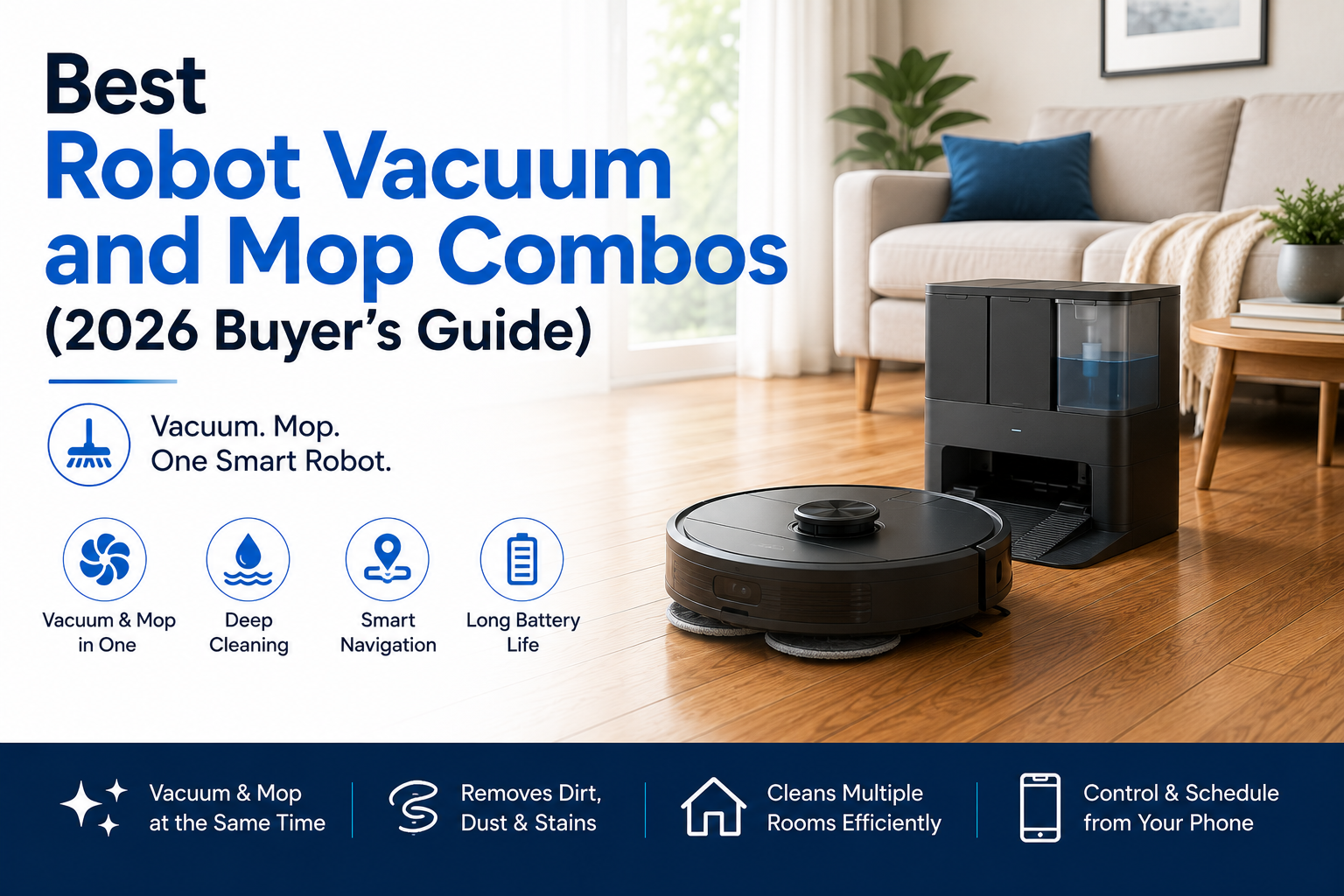
Why Robot Vacuum and Mop Combos Are So Popular
A robot vacuum and mop combo can save time by combining two everyday floor-cleaning jobs into one device. Instead of using a robot vacuum for dust and a separate mop for light stains, these smart cleaning robots can vacuum first and then mop hard floors in the same cleaning routine.
They are especially useful in homes with hardwood floors, tile, vinyl plank, laminate, pets, kids, kitchens, and high-traffic living areas. The best robot vacuum mop combo should not only move around the house, but also clean efficiently, avoid carpets when mopping, and handle daily dust, crumbs, pet hair, and light floor marks.
What to Look for in a Robot Vacuum and Mop Combo
- Strong suction power – helps pick up crumbs, dust, pet hair, and debris before mopping
- Smart mapping – allows room-by-room cleaning and no-mop zones
- Carpet detection – helps prevent wet mop pads from dragging across rugs or carpet
- Self-emptying dock – reduces how often you empty the dustbin manually
- Auto-washing mop system – helps clean mop pads between runs
- Water control – useful for hardwood, laminate, vinyl, and sensitive flooring
Robot Vacuum and Mop Combo Features Compared
| Feature | Why It Matters |
|---|---|
| Vacuum Suction | Removes dry debris before mopping so dirt is not smeared across the floor. |
| Mop Pad Design | Spinning, vibrating, or pressure-based mop pads usually clean better than basic drag pads. |
| Smart Mapping | Helps the robot clean specific rooms, avoid carpets, and follow efficient routes. |
| Self-Emptying Dock | Reduces manual dustbin emptying, especially in homes with pets or daily cleaning schedules. |
| Auto-Wash Dock | Can wash mop pads automatically, making the system easier to maintain. |
Best Overall Type for Most Homes
For most households, the best robot vacuum and mop combo is one with strong suction, accurate mapping, carpet detection, and a dock that handles at least some maintenance automatically. A model that can empty dust, wash mop pads, and manage water levels is usually easier to live with long term.
If your home has mostly hard floors, a robot vacuum and mop combo can be one of the most useful home robots. If your home has mostly carpet, you may be better off focusing on a stronger vacuum-only robot or comparing robot vacuums for pet hair and carpet.
SEE ROBOT VACUUM AND MOP COMBOSBest Robot Vacuum and Mop Combo for Hardwood Floors
Hardwood floors need careful mopping because too much water can be a problem, especially on older, unsealed, or sensitive wood. A good robot vacuum and mop combo for hardwood floors should offer water control, carpet detection, and gentle movement.
If your main concern is protecting wood surfaces, compare hardwood-safe cleaning features before choosing. You may also want to review our guide to the best robot vacuums for hardwood floors if dry cleaning matters more than mopping.
Best Robot Vacuum and Mop Combo for Tile Floors
Tile floors are usually one of the best surfaces for robot vacuum and mop combos. Kitchens, bathrooms, laundry rooms, and entryways often collect crumbs, dust, pet hair, footprints, and light sticky spots.
For tile, look for strong suction, edge cleaning, mop pressure, and good navigation around chair legs, cabinets, and baseboards. Later, HomeBotGuide may create a dedicated guide for robot mops for tile floors and robot vacuum mop combos for kitchen cleaning.
Best Robot Vacuum and Mop Combo for Pet Owners
Pet owners often deal with both dry and wet messes. A robot vacuum and mop combo can help with dog hair, cat hair, paw prints, litter dust, food crumbs, and water bowl splashes.
For pets, prioritize suction, filtration, anti-tangle brushes, self-emptying docks, and mop pad washing. If pet hair is your main problem, compare our guide to the best robot vacuums for pet hair before choosing a mop combo.
Robot Vacuum and Mop Combo vs Separate Robot Mop
A robot vacuum and mop combo is usually better for homeowners who want one device to handle daily floor maintenance. A separate robot mop may make sense if you already own a strong robot vacuum or if mopping performance matters more than vacuuming.
For most busy households, a combo robot is simpler. For heavier messes or very specific floor-care needs, a dedicated robot mop may still be worth considering in the future.
Robot Vacuum and Mop Combo vs Regular Mop
A robot vacuum and mop combo is best for light maintenance, not heavy scrubbing. It can help keep floors cleaner during the week, but it may not fully replace a regular mop for sticky spills, grout lines, dried stains, or deep cleaning.
The best way to think about it is simple: a robot vacuum mop combo reduces how often you need to clean manually, but it does not completely remove the need for occasional deep cleaning.
Popular Robot Vacuum and Mop Combo Brands
Popular brands in the robot vacuum and mop combo category include Roborock, Roomba, Shark, Eufy, Dreame, Narwal, and Ecovacs. Some brands focus more on premium docks and advanced mapping, while others focus on value, simple controls, or self-emptying convenience.
Roborock and Dreame are often discussed for advanced vacuum-mop systems. Narwal is known for premium mopping features. Eufy offers value-focused options. Shark has strong self-emptying models. Roomba remains one of the most recognized names in robot vacuums. Ecovacs also has several robot vacuum and mop systems under its Deebot line.
Future brand comparisons such as Roborock vs Roomba, Dreame vs Roborock, Narwal vs Roborock, Shark vs Roomba, and best Eufy robot vacuum and mop combos can help buyers compare more specific options.
Are Robot Vacuum and Mop Combos Worth It?
Robot vacuum and mop combos are worth it for many homes with hard floors, pets, kids, or frequent light messes. They are especially useful if you want daily floor maintenance without pulling out a vacuum and mop every day.
They may not be worth it if your home has mostly thick carpet, if your floors cannot tolerate moisture, or if you expect the robot to scrub like a person. For the best results, use them as maintenance tools rather than complete replacements for deep cleaning.
Common Mistakes When Buying a Robot Vacuum and Mop Combo
- Buying a mop combo without checking carpet detection
- Using too much water on hardwood or laminate floors
- Choosing a model with weak suction because it has mopping features
- Ignoring mop pad cleaning and replacement costs
- Assuming every combo robot can handle heavy stains
- Forgetting to check dock size, water tank size, and bag replacement costs
Future Buying Guides to Compare
This article is part of the HomeBotGuide floor-cleaning robot cluster. If you are comparing smart cleaning options, you may also want to review robot vacuums for pet hair, robot vacuums for hardwood floors, self-emptying robot vacuums, robot mops for tile floors, robot mops for hardwood floors, and robot vacuums for large homes.
As home robots continue improving, robot vacuum and mop combos may also connect with AI home robots, smart home cleaning systems, home assistant robots, and future household robots designed to automate more daily chores.
Related HomeBotGuide Articles
- Best Robot Vacuums for Pet Hair
- Best Robot Vacuums for Hardwood Floors
- Best AI Home Robots
- Are Home Robots Worth It?
FAQ – Robot Vacuum and Mop Combos
Are robot vacuum and mop combos worth it?
Yes, robot vacuum and mop combos are worth it for many homes with hard floors, pets, kids, or daily light messes. They work best as maintenance tools between deeper cleanings.
Can a robot vacuum and mop combo replace mopping?
Not completely. A robot vacuum and mop combo can reduce how often you mop manually, but sticky spills, grout lines, and deep stains may still need regular cleaning.
Are robot vacuum and mop combos safe for hardwood floors?
Many are safe for sealed hardwood floors when used correctly, but avoid excessive water and be careful with older, unsealed, or moisture-sensitive wood floors.
Do robot vacuum and mop combos work for pet hair?
Yes, but suction and brush design are still important. Pet owners should look for strong suction, anti-tangle brushes, good filtration, and a self-emptying dock.
Do robot vacuum and mop combos avoid carpet?
Many higher-quality models can detect carpet and avoid mopping rugs, but not all models handle this equally well. Always check carpet detection and no-mop zone features.
What floors are best for robot vacuum and mop combos?
Tile, vinyl, laminate, and sealed hardwood floors are usually the best surfaces. Thick carpet and moisture-sensitive flooring are less ideal for mopping features.
Which brands make robot vacuum and mop combos?
Popular robot vacuum and mop combo brands include Roborock, Roomba, Shark, Eufy, Dreame, Narwal, and Ecovacs.
We may earn a commission from qualifying purchases at no extra cost to you.