
Robot Vacuum and Mop Combo vs Separate Robot Mop
One of the biggest decisions for smart home buyers is whether to purchase a robot vacuum and mop combo or a dedicated robot mop. Both options can help maintain cleaner floors, but they serve different needs. Some homeowners prioritize convenience and automation, while others want the strongest possible mopping performance. In this guide, we compare robot vacuum and mop combos against separate robot mops to help you determine which option fits your home, flooring, pets, budget, and cleaning routine.
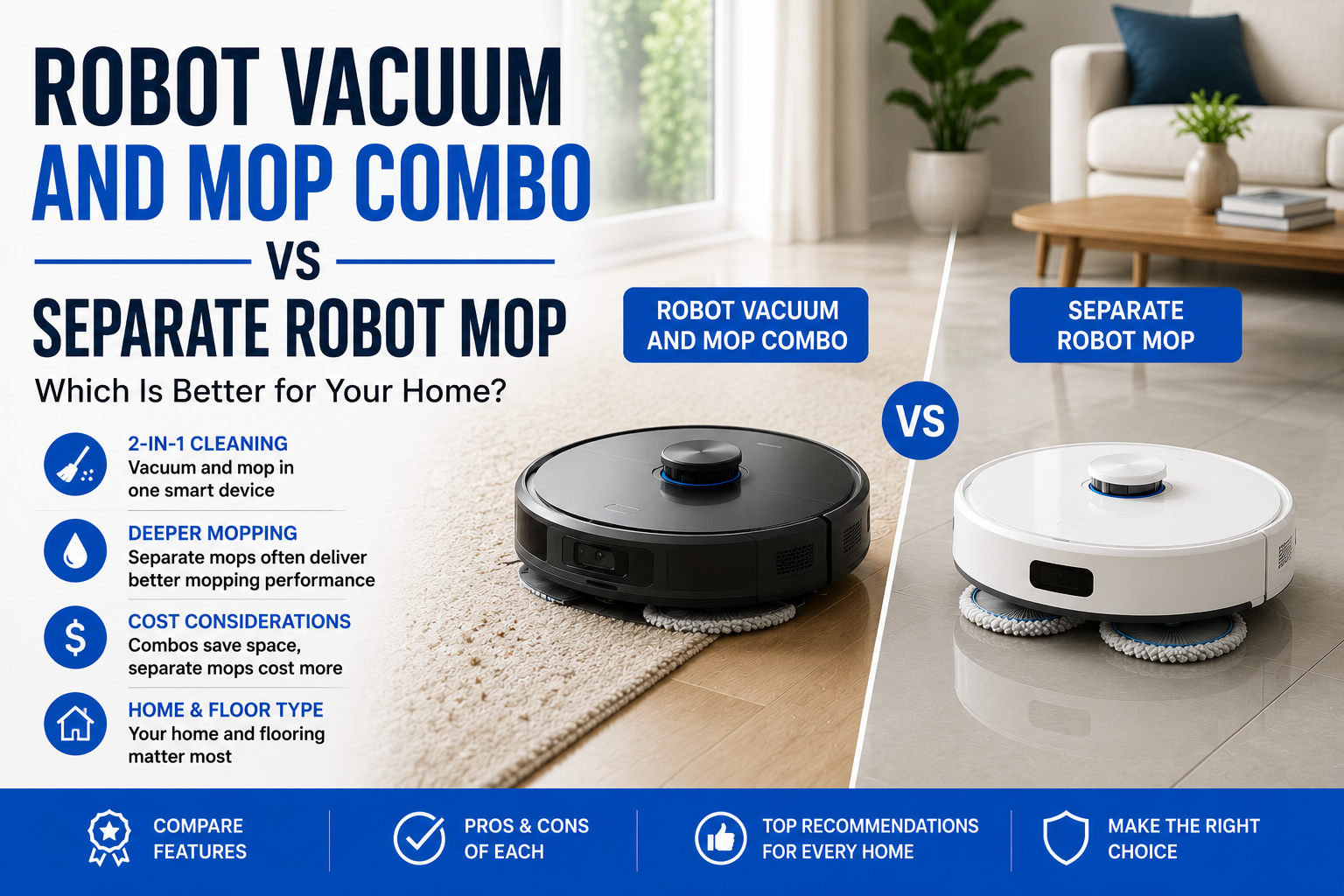
What Is a Robot Vacuum and Mop Combo?
A robot vacuum and mop combo combines two cleaning functions into one machine. It can vacuum dust, pet hair, crumbs, and debris while also mopping hard floors using a water tank and mop pad system.
Many modern combo robots use smart mapping, room recognition, obstacle avoidance, and app-based controls to automate both vacuuming and mopping.
What Is a Dedicated Robot Mop?
A dedicated robot mop focuses exclusively on mopping rather than vacuuming. These systems often include stronger scrubbing mechanisms, larger water tanks, specialized mop pads, and more advanced floor washing capabilities.
Because they focus on a single task, some dedicated robot mops can deliver better mopping performance than combo units.
Quick Comparison
| Feature | Vacuum & Mop Combo | Separate Robot Mop |
|---|---|---|
| Convenience | Excellent | Moderate |
| Vacuuming | Included | Not Included |
| Mopping Strength | Good | Often Better |
| Space Required | Less | More |
| Cost Efficiency | Usually Better | Depends on Setup |
| Maintenance | Single Device | Multiple Devices |
Advantages of a Robot Vacuum and Mop Combo
- One machine handles both cleaning tasks
- Less storage space required
- Simpler smart home setup
- Usually lower overall cost
- Automated vacuuming and mopping schedules
- Ideal for mixed flooring homes
For many homeowners, a combo system offers the best balance of convenience, performance, and value.
Advantages of a Dedicated Robot Mop
- Often stronger mopping performance
- Larger water reservoirs
- More specialized cleaning systems
- Better for large hard-floor homes
- Focused floor washing capabilities
- Can complement an existing robot vacuum
Dedicated robot mops make the most sense for homes where mopping is a major priority.
Best Choice for Tile Floors
Tile floors work well with both options. However, homeowners focused on kitchen tile, bathroom tile, and grout maintenance may prefer the stronger scrubbing found in dedicated robot mops.
Compare our guide to the best robot mops for tile floors.
Best Choice for Hardwood Floors
For hardwood floors, controlled water output is more important than raw scrubbing power. Many premium combo robots perform extremely well on sealed hardwood surfaces because they combine vacuuming with careful mopping.
See our guide to the best robot mops for hardwood floors.
What About Pet Owners?
Pet owners often benefit more from a vacuum and mop combo because pet hair usually needs to be removed before mopping. A combo machine can handle both tasks automatically.
If pet hair is a major concern, compare our guide to the best robot vacuums for pet hair.
COMPARE TOP ROBOT VACUUM & MOP COMBOSMaintenance Differences
Combo Robot Maintenance
- Empty dustbin
- Clean filters
- Wash mop pads
- Refill water tanks
- Maintain brushes and sensors
Dedicated Robot Mop Maintenance
- Wash mop pads regularly
- Refill water systems
- Clean mop mechanisms
- Maintain dock systems
- Inspect wheels and sensors
Learn more in our Robot Vacuum Maintenance Guide.
Cost Comparison
A robot vacuum and mop combo is usually more cost-effective because one machine performs two jobs. Buying a separate robot vacuum and robot mop often costs more overall.
However, premium homeowners who want the best vacuuming and the best mopping performance may prefer dedicated machines for each task.
Which Option Is Better for Apartments?
Apartments generally benefit from robot vacuum and mop combos because space is limited and one machine can handle most cleaning needs.
See our guide to the best robot vacuums for apartments.
Which Option Is Better for Large Homes?
Large homes may benefit from either solution. Some homeowners prefer dedicated mops for extensive hard-floor areas, while others prioritize convenience through premium combo systems with self-cleaning docks.
Compare options in our guide to the best robot vacuums for large homes.
Who Should Buy a Combo Robot?
- Most homeowners
- Apartment residents
- Pet owners
- Families with mixed flooring
- Smart home users seeking convenience
- Buyers wanting one machine instead of two
Who Should Buy a Separate Robot Mop?
- Homes with extensive hard flooring
- Buyers focused on mopping performance
- People who already own a robot vacuum
- Large homes with frequent floor washing needs
- Users seeking specialized floor care
Final Verdict
For most households, a robot vacuum and mop combo offers the best overall value because it combines two essential cleaning tasks into one system. It saves space, reduces cost, and simplifies automation.
However, homeowners who prioritize floor washing performance above everything else may benefit from adding a dedicated robot mop to their cleaning setup.
Related HomeBotGuide Articles
- Best Robot Mops
- Best Robot Mops for Tile Floors
- Best Robot Mops for Hardwood Floors
- Are Robot Mops Worth It?
- Best Robot Vacuum and Mop Combos
- Best Self-Emptying Robot Vacuums
- Best Robot Vacuums for Hardwood Floors
- Best Robot Vacuums for Pet Hair
- Robot Vacuum Buying Guide for Beginners
- Robot Vacuum Maintenance Guide
FAQ – Combo vs Separate Robot Mop
Is a robot vacuum and mop combo worth it?
Yes. For most homes, a combo system provides excellent convenience and value by handling both vacuuming and mopping.
Do dedicated robot mops clean better?
Often yes. Dedicated robot mops can offer stronger scrubbing systems and more advanced floor washing features.
Which option is better for pet owners?
A robot vacuum and mop combo is usually better because it removes pet hair before mopping.
Which option is better for hardwood floors?
Both can work well, but careful water control is essential when cleaning hardwood floors.
Do I need both a robot vacuum and a robot mop?
Most homeowners do not. A high-quality combo machine is often sufficient for daily cleaning needs.
Which option saves more money?
A robot vacuum and mop combo generally costs less than buying two separate robots.
We may earn a commission from qualifying purchases at no extra cost to you.