
Are Robots Good for Elderly Care?
Robots are becoming an increasingly important part of elderly care technology. From companion robots and monitoring robots to AI home robots and smart home devices, modern robotics can help support seniors who want to live independently. But are robots actually good for elderly care? The answer depends on expectations, needs, and how the technology is used. In this guide, we'll examine the benefits, limitations, and future of robots in senior care.
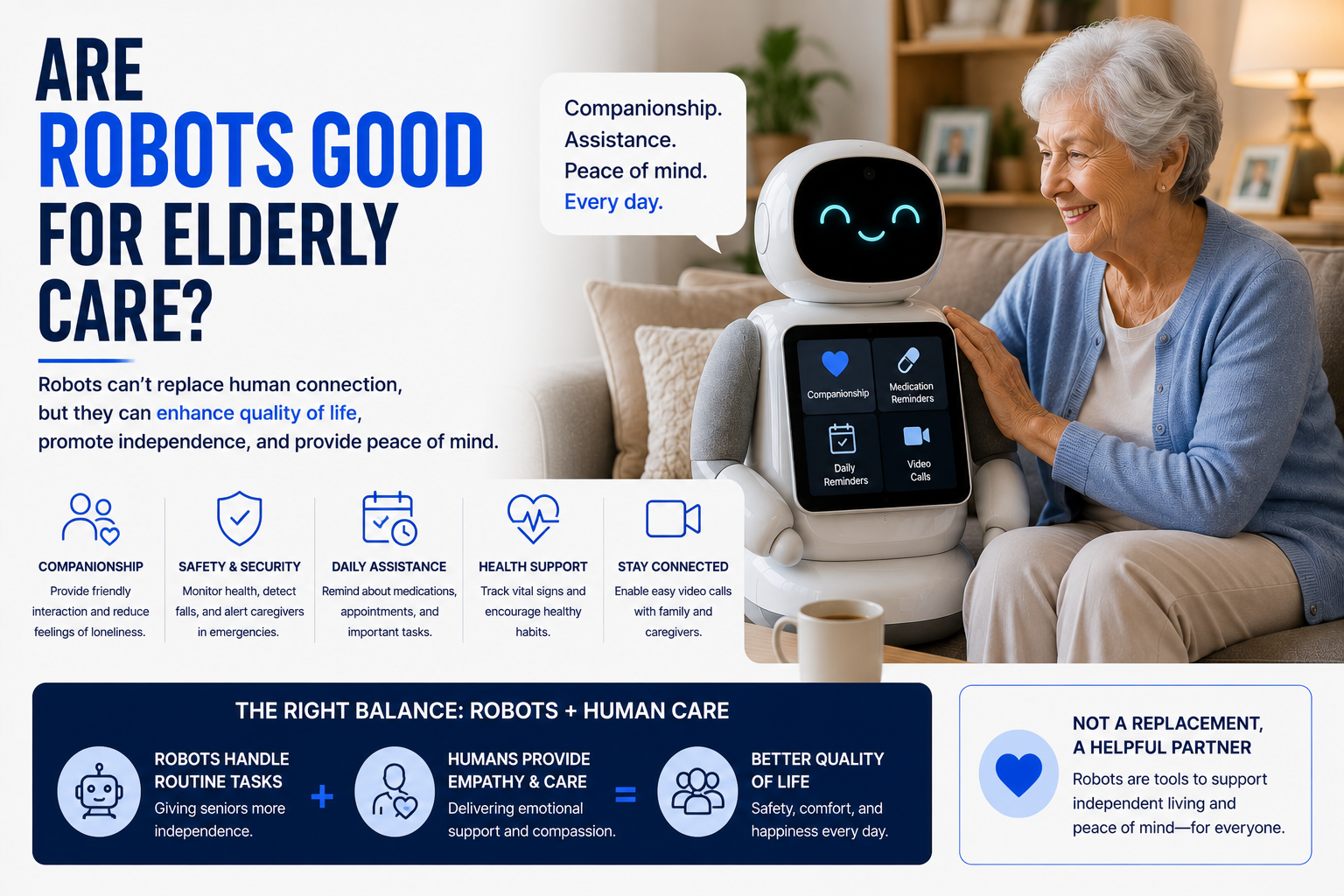
Short Answer: Yes, With Realistic Expectations
Robots can be very helpful in elderly care when used appropriately. They can provide reminders, communication tools, monitoring features, companionship, smart home control, and additional safety support.
However, robots are not a replacement for family members, caregivers, nurses, doctors, or human relationships. The best results occur when robots complement human care rather than replace it.
How Robots Are Used in Elderly Care
Today's elderly care robots perform a variety of tasks. Some focus on social interaction and companionship, while others assist with monitoring, reminders, communication, and home automation.
Many of these technologies fall under the broader category of smart home robots and AI home robots designed to make daily life easier.
Benefits of Robots for Seniors
- Support independent living
- Provide reminders for medication and appointments
- Improve communication with family
- Reduce feelings of loneliness
- Offer monitoring and safety features
- Assist with smart home control
- Help families stay connected
Elderly Care Robot Benefits Compared
| Benefit | How It Helps |
|---|---|
| Companionship | Provides interaction and social engagement. |
| Reminders | Supports medication schedules and daily routines. |
| Monitoring | Allows family members to stay informed. |
| Communication | Makes it easier to stay connected with loved ones. |
| Safety | Works alongside fall detection and monitoring systems. |
| Convenience | Simplifies daily tasks through automation. |
Companion Robots for Elderly Care
Companion robots focus on conversation, reminders, entertainment, and social interaction. These robots may help reduce feelings of isolation, particularly for seniors who live alone.
Some AI companion robots can play music, answer questions, share news, facilitate video calls, and provide daily reminders.
Learn more in our guide to the Best Companion Robots for Seniors.
SEE ELDERLY CARE ROBOTSMonitoring Robots for Elderly Care
Monitoring robots help family members stay informed through cameras, activity tracking, communication tools, and remote check-ins. These elderly care robots are often designed to support independent living while providing additional peace of mind.
Monitoring robots can be especially useful for seniors who live alone and want to remain in their own homes.
See our guide to the Best Monitoring Robots for Elderly People.
Can Robots Help Seniors Live Independently?
Yes. Many smart home robots are designed specifically to support independent living. Features such as reminders, communication tools, voice control, smart home integration, and monitoring systems can help older adults maintain autonomy longer.
For many families, robots provide support that allows seniors to remain comfortably at home rather than moving into assisted living facilities sooner than necessary.
Can Robots Improve Safety?
Robots can improve safety when combined with other technologies such as fall detection devices, smart lighting, home monitoring systems, and emergency alert services.
While robots cannot prevent every emergency, they may help families identify problems sooner and improve communication during critical situations.
Can Robots Reduce Loneliness?
Some research and real-world experiences suggest that companion robots may help reduce feelings of loneliness among seniors. Social interaction, reminders, entertainment, and routine engagement can make the home feel less isolated.
However, robots should supplement—not replace—human relationships and family interaction.
Limitations of Robots in Elderly Care
Despite their benefits, robots have limitations. Technology can support elderly care, but it cannot provide the emotional understanding, judgment, and personal connection that human caregivers offer.
- Cannot replace human caregivers
- Require electricity and internet access
- May have privacy concerns
- Some seniors may resist new technology
- Can require setup and maintenance
- Often involve upfront costs
Are Elderly Care Robots Worth It?
For many families, elderly care robots are worth the investment because they improve communication, support routines, and add convenience. The value often depends on the senior's lifestyle, health needs, and comfort with technology.
Robots are particularly useful when they are part of a larger care strategy that includes family involvement and appropriate healthcare support.
How Smart Home Devices Support Elderly Care
Many of the most effective elderly care solutions combine robots with other smart home devices. Smart speakers, fall detection devices, monitoring systems, smart lighting, and security cameras can work together to create a safer environment.
Read our guide to the Best Smart Home Devices for Elderly Living Alone.
The Future of Elderly Care Robots
The future of elderly care robots looks promising. AI home robots are becoming more conversational, more aware of routines, and better integrated with smart home systems. Future robots may help identify health concerns, detect unusual behavior patterns, and provide more personalized support.
As robotics technology continues to advance, elderly care robots are expected to become more useful, affordable, and widely adopted.
Final Verdict: Are Robots Good for Elderly Care?
Yes, robots can be very good for elderly care when used appropriately. They can support independent living, improve communication, provide reminders, reduce loneliness, and enhance safety.
The most important thing to remember is that robots work best when they support human care rather than replace it. Used thoughtfully, elderly care robots can become valuable tools for seniors and their families.
Related HomeBotGuide Articles
- Best Companion Robots for Seniors
- Best Monitoring Robots for Elderly People
- Best Fall Detection Devices for Seniors
- Best Smart Home Devices for Elderly Living Alone
- Best Smart Home Robots
- Best AI Home Robots
- Best Personal Assistant Robots
FAQ – Are Robots Good for Elderly Care?
Can robots help seniors live independently?
Yes. Many robots provide reminders, communication tools, monitoring features, and smart home integration that support independent living.
Can robots replace caregivers?
No. Robots should complement human caregivers, not replace them.
Do companion robots reduce loneliness?
Some seniors find companion robots helpful for social interaction, reminders, and daily engagement.
Are monitoring robots useful for elderly care?
Yes. Monitoring robots can help families stay connected and provide additional peace of mind.
Are elderly care robots worth it?
For many families, elderly care robots provide valuable support, convenience, communication, and safety benefits.
What is the future of elderly care robots?
Future robots are expected to become smarter, more personalized, and more integrated with smart home technologies and AI systems.
We may earn a commission from qualifying purchases at no extra cost to you.