Robotic Pool Cleaners Guide

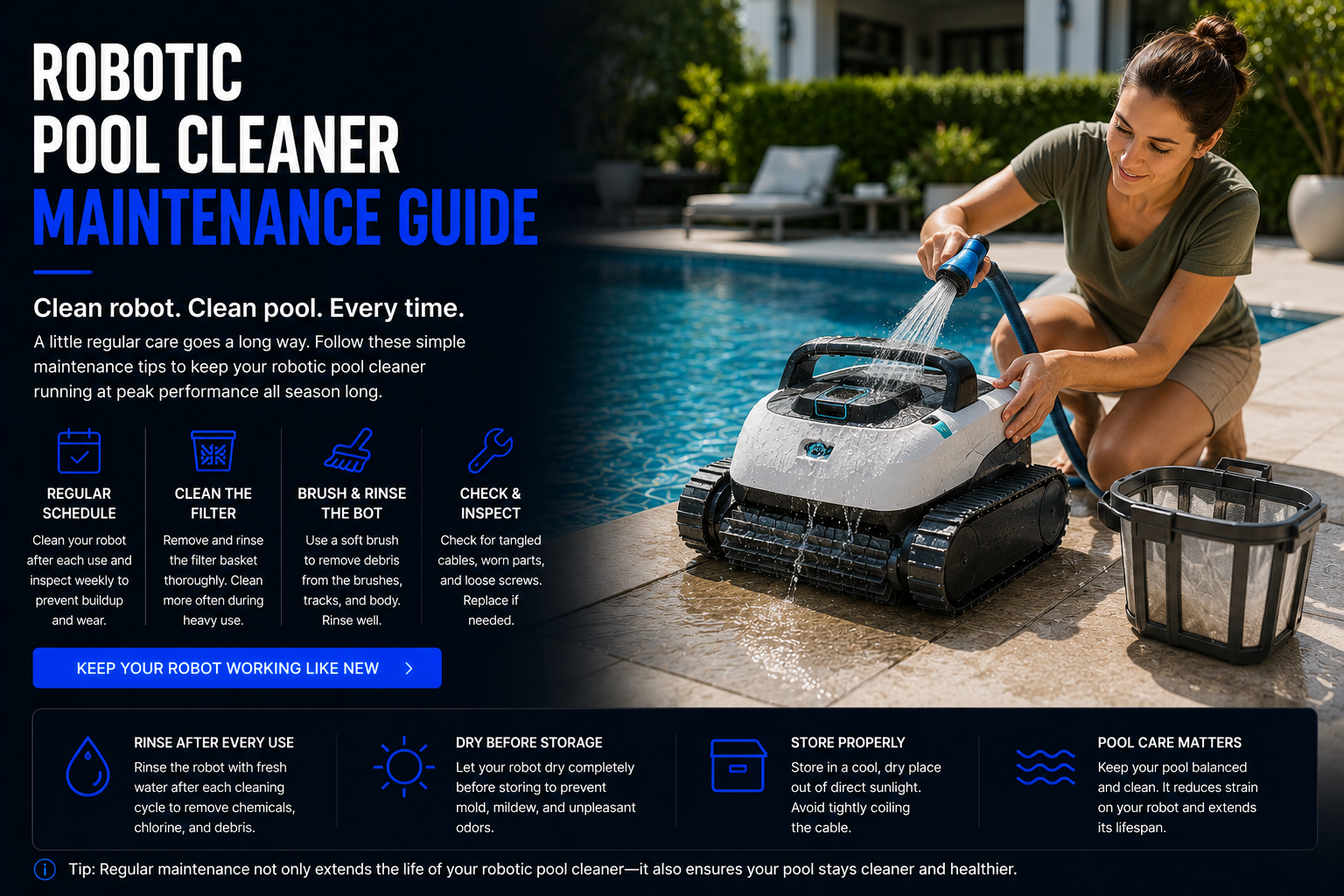
Robotic Pool Cleaner Maintenance Guide: Keep Your Pool Robot Running Like New

A robotic pool cleaner can make pool maintenance easier, reduce manual vacuuming, and help keep pool floors, walls, and waterlines cleaner, but only if it is maintained correctly. This guide explains how to clean robotic pool cleaner filters, rinse debris baskets, inspect brushes, protect cords, care for cordless batteries, clean tracks and wheels, prevent clogs, store your pool robot, troubleshoot common problems, and keep your pool cleaner performing its best.

Robotic pool cleaner maintenance guide keep your pool robot running like new

How Do You Maintain a Robotic Pool Cleaner?

To maintain a robotic pool cleaner, empty the debris basket after each use, rinse the filter, remove leaves and hair from the intake, clean brushes, inspect tracks or wheels, check the power cord or battery, wipe sensors if your model has them, rinse the cleaner with fresh water, and store it away from direct sun when not in use.

Robotic pool cleaners work in a difficult environment. They deal with chlorine, saltwater, sand, leaves, bugs, pollen, algae dust, sunscreen residue, fine dirt, pool chemicals, and constant moisture. Without regular maintenance, a pool robot can lose suction, miss debris, stop climbing walls, drain battery faster, clog filters, tangle cords, or wear out earlier than expected.

The best maintenance routine depends on your pool type, debris level, cleaner design, corded or cordless system, filter type, pool surface, and how often you run the robot. A cleaner used several times per week in a leafy pool needs more care than a cleaner used occasionally in a screened pool.

Quick answer: clean the filter after every run, rinse the robot with fresh water, remove debris from brushes and tracks, protect the cord or battery, and store the cleaner properly between uses.

Robotic Pool Cleaner Maintenance Guide

Step 1

Empty the Debris Basket After Every Cleaning Cycle

The debris basket or filter canister is one of the most important parts of a robotic pool cleaner. It collects leaves, bugs, dirt, sand, hair, pollen, and other pool debris. If the basket is full, the cleaner loses suction and may leave debris behind.

After each cleaning cycle, remove the basket or filter canister, empty the debris, rinse it thoroughly, and let it dry before storage. This simple habit keeps water flow strong and helps the pool robot clean more efficiently.

Step 2

Rinse the Filters Thoroughly

Robotic pool cleaner filters can trap fine dirt, sand, silt, algae dust, and pollen. Even when the basket looks empty, the filter panels may still be coated with fine particles that reduce water flow.

Rinse filters with clean water after every use. Avoid harsh pressure unless the manufacturer allows it. If the filter looks clogged, stained, torn, warped, or less effective after cleaning, it may be time to replace it.

Step 3

Clean Brushes, Rollers, Tracks, and Wheels

Brushes and rollers help the cleaner scrub pool surfaces and move across the floor, walls, or waterline. Tracks and wheels help the robot navigate the pool. Leaves, hair, string, pebbles, and debris can get trapped around these parts.

Inspect the moving parts regularly. Remove wrapped hair, stuck leaves, sand buildup, and small objects. If tracks are loose, brushes are worn, or wheels are damaged, cleaning performance and wall climbing may suffer.

Step 4

Check the Intake and Water Flow Path

A robotic pool cleaner needs proper water flow to collect debris. If the intake is blocked by leaves, stones, hair, or plastic pieces, the cleaner may move normally but fail to pick up debris.

Check the intake area, filter connection, and water outlet after cleaning. A blocked water path can reduce suction, strain the motor, and make the cleaner look weaker than it really is.

Step 5

Care for the Power Cord

Corded robotic pool cleaners need cord care. Twisted or tangled cords can limit movement, reduce coverage, and make storage harder. After each use, untwist the cable, check for damage, and store it loosely.

Do not pull the cleaner out of the pool by the cord unless the manufacturer specifically allows it. Use the handle when lifting the cleaner. Protecting the cord helps prevent expensive damage and keeps the robot moving properly.

Step 6

Maintain Cordless Battery Health

Cordless robotic pool cleaners rely on battery health. To protect runtime, follow the charging instructions, avoid long-term storage with a fully drained battery, keep the charger dry, and do not expose the battery or charger to unnecessary heat.

If your cordless pool robot runs for much less time than before, takes longer to charge, or stops before finishing the pool, the battery may be aging or the cleaner may be working harder due to clogged filters or dirty moving parts.

Step 7

Rinse the Cleaner with Fresh Water

After removing the cleaner from the pool, rinse the exterior with fresh water. This helps remove chlorine, salt, pool chemicals, dirt, and residue from the body, wheels, brushes, and tracks.

Fresh-water rinsing is especially important for saltwater pools because salt residue can be harder on parts over time. Let the robot dry before storing it in a shaded, protected area.

Step 8

Store the Pool Robot Correctly

Robotic pool cleaners should not be left in the pool all the time unless the manufacturer says it is safe. Long exposure to chemicals, sun, and water can wear down parts faster.

Store the cleaner in a cool, shaded, dry place. Avoid direct sunlight, extreme heat, freezing temperatures, and tight cord wrapping. Proper storage helps protect the motor, seals, filters, battery, cord, and plastic housing.

Robotic Pool Cleaner Maintenance Schedule

Maintenance Task How Often Why It Matters Best For
Empty debris basket After every use Maintains suction and debris pickup All robotic pool cleaners
Rinse filters After every use Improves water flow and fine debris capture Pools with sand, pollen, or dirt
Clean brushes and rollers Weekly or as needed Maintains scrubbing and movement Wall-climbing pool robots
Inspect tracks or wheels Weekly Helps traction and navigation Inground and wall-climbing cleaners
Untwist power cord After each use Prevents tangles and cable wear Corded robotic pool cleaners
Charge battery properly After use or as directed Protects runtime and battery life Cordless robotic pool cleaners
Rinse with fresh water After each use Removes chlorine, salt, and chemical residue All pool robots
Inspect parts Monthly Catches wear before failure Frequent pool cleaner users
Seasonal storage End of swim season Protects motor, battery, cord, and filters Seasonal pool owners

Most Important Robotic Pool Cleaner Parts to Maintain

Filter Basket

The filter basket collects leaves, dirt, sand, bugs, and pool debris. A clean basket helps maintain suction and water flow.

Filter Panels

Filters trap fine particles like pollen, silt, algae dust, and sand. Clogged filters reduce cleaning performance.

Brushes

Brushes help scrub the floor, walls, or waterline. Worn brushes can reduce cleaning and climbing ability.

Tracks and Wheels

Tracks and wheels control movement. Dirty or worn parts can cause poor navigation or wall-climbing problems.

Power Cord or Battery

Corded cleaners need cable care, while cordless cleaners need battery care and proper charging habits.

Motor Housing

The cleaner body should be rinsed and stored properly to protect seals, electronics, and internal components.

How to Clean Robotic Pool Cleaner Filters

Filter cleaning is the most important routine task for most robotic pool cleaners. Remove the filter basket or filter panels after each cleaning cycle, empty loose debris, and rinse all filter surfaces with clean water.

Fine filters may look clean but still hold small particles that restrict flow. If your cleaner is losing suction, moving slowly, or leaving fine debris behind, clogged filters are one of the first things to check.

Do not use harsh chemicals unless approved by the manufacturer. If filters are torn, cracked, warped, or no longer clean well, replace them. Good filters help the cleaner pick up leaves, sand, dirt, bugs, pollen, and fine pool debris more effectively.

Corded Robotic Pool Cleaner Maintenance

Corded robotic pool cleaners need special attention to the cable. A tangled or twisted cable can reduce cleaning coverage and make the robot work harder. After each cleaning session, stretch the cord loosely, remove twists, and store it without sharp bends.

Check the cable for cuts, cracks, kinks, swelling, or worn spots. Also inspect the power supply and connectors. Never use a damaged power cord or power supply around water.

Corded models can be very reliable when the cable is cared for properly. Good cable maintenance helps the cleaner reach the full pool and reduces frustration over tangles.

Cordless Robotic Pool Cleaner Maintenance

Cordless robotic pool cleaners avoid cable tangles, but battery care becomes more important. Charge the cleaner according to the manufacturer’s instructions and keep the charging port clean and dry.

Avoid storing a cordless pool robot with a completely dead battery for long periods. Keep the charger protected from moisture and heat. If runtime becomes much shorter, clean the filters and moving parts first because a clogged cleaner can drain power faster.

Battery replacement may eventually be needed depending on model, usage, water conditions, charging habits, and storage.

Robotic Pool Cleaner Maintenance by Pool Type

Above-Ground Pools

Above-ground pool cleaners are often lighter and simpler, but they still need filter cleaning, brush checks, fresh-water rinsing, and proper storage.

Inground Pools

Inground pool robots often handle larger areas, walls, slopes, and more debris. Inspect tracks, brushes, filter baskets, and cables more often.

Saltwater Pools

Saltwater pools require careful fresh-water rinsing after use. Salt residue can wear parts faster if the cleaner is stored dirty.

Pools with Heavy Leaves

Leaf-heavy pools fill baskets quickly. Empty the basket often and check the intake for clogs during heavy debris seasons.

Pools with Sand or Fine Dirt

Fine debris can clog filters quickly. Rinse filter panels thoroughly and consider fine-filter options if available.

Large Pools

Large pools put more runtime and movement demand on the robot. Check filters, tracks, brushes, and cables more frequently.

Common Robotic Pool Cleaner Problems and Fixes

Problem Common Cause What to Try
Cleaner is not picking up debris Clogged filter or full basket Empty basket and rinse filters thoroughly
Cleaner stops early Battery issue, blockage, or full filter Charge battery, clear intake, clean filters
Cleaner will not climb walls Dirty tracks, worn brushes, low suction Clean tracks, inspect brushes, rinse filters
Cord keeps tangling Twisted cable or poor storage Untwist cable after use and store loosely
Cleaner moves slowly Debris in wheels or tracks Clean tracks, wheels, and intake area
Fine dirt returns to pool Wrong filter or damaged filter Use fine filters and inspect filter panels
Cleaner is hard to lift Water trapped inside Let water drain before fully lifting
Bad smell from cleaner Dirty filter or poor storage Clean filters and dry before storage

How to Make a Robotic Pool Cleaner Last Longer

  • Clean filters after every use: Dirty filters reduce suction and strain the cleaner.
  • Remove debris before it hardens: Leaves, hair, and dirt are easier to clean immediately after use.
  • Rinse with fresh water: This helps remove chlorine, salt, and chemical residue.
  • Protect the cord: Avoid pulling, kinking, twisting, or wrapping the cable too tightly.
  • Charge cordless models correctly: Follow battery care instructions and avoid long-term dead storage.
  • Store in shade: Avoid constant sun, heat, freezing temperatures, and chemical exposure.
  • Inspect brushes and tracks: Worn moving parts reduce cleaning coverage and climbing ability.
  • Use the right cleaner for your pool: A cleaner that is too small for the pool may wear faster.

Robotic Pool Cleaner Storage Tips

Proper storage is one of the easiest ways to protect a robotic pool cleaner. After cleaning and rinsing the robot, allow it to drain and dry before storage. Store the cleaner in a shaded, protected area away from direct sun, extreme heat, freezing temperatures, and pool chemicals.

Do not leave the cleaner floating in the pool for long periods unless the manufacturer specifically allows it. Pool chemicals, sunlight, and constant water exposure can shorten the life of brushes, seals, plastic parts, cords, and filters.

If your cleaner came with a caddy, use it. A caddy helps protect the cable, power supply, body, and filter system while making the cleaner easier to move.

Robotic Pool Cleaner Maintenance vs Manual Pool Vacuum Maintenance

Manual pool vacuums require hoses, poles, connections, pool pump suction, and more direct labor. Robotic pool cleaners require filter cleaning, brush checks, cord or battery care, track maintenance, and proper storage.

A robotic pool cleaner is usually easier for routine cleaning because it works independently, but it is not maintenance-free. The robot must be cleaned after use if you want consistent suction and longer life.

Many pool owners use both: a robotic pool cleaner for regular cleaning and manual tools for spot cleaning, brushing, algae cleanup, steps, corners, and unusual messes.

Future of Robotic Pool Cleaner Maintenance

Robotic pool cleaner maintenance is becoming easier as pool robots improve. Future models may include smarter filter alerts, better self-diagnostics, longer battery life, improved debris detection, easier filter cleaning, automatic cleaning cycle recommendations, and app-based maintenance reminders.

As smart pool systems develop, robotic pool cleaners may connect more closely with water quality monitors, smart pumps, home maintenance robots, AI home robots, home monitoring robots, and smart home routines. Future pool robots may adjust cleaning based on weather, pool usage, debris levels, water condition, and seasonal schedules.

For pool owners, the long-term trend is toward easier maintenance, better automation, and smarter robotic pool cleaning systems that require less guesswork.

Related Robotic Pool Cleaner Guides

Related Home Robot Guides

Robotic Pool Cleaner Maintenance FAQ

How often should I clean my robotic pool cleaner?
You should empty the basket and rinse the filter after every use. Brushes, tracks, wheels, cords, batteries, and the cleaner body should be inspected regularly.

Do I need to clean the filter after every run?
Yes, cleaning the filter after every run helps maintain suction, water flow, and debris pickup.

Why is my robotic pool cleaner not picking up debris?
The most common causes are a clogged filter, full basket, blocked intake, worn brushes, or a cleaner that is not matched to your debris type.

Why does my robotic pool cleaner stop early?
Early stopping may be caused by a full filter, blockage, battery issue, power problem, or safety shutdown.

Can I leave my robotic pool cleaner in the pool?
It is usually better to remove, rinse, dry, and store the cleaner after use unless your manufacturer says it can stay in the pool.

How do I maintain a cordless robotic pool cleaner?
Clean filters, rinse the body, protect the charging port, charge the battery correctly, and avoid storing it with a fully drained battery.

How do I maintain a corded robotic pool cleaner?
Clean filters, rinse the robot, untwist the cable, inspect the power cord, and store the cable loosely without sharp bends.

Why will my pool robot not climb walls?
Wall-climbing problems can be caused by clogged filters, worn brushes, dirty tracks, low suction, slick pool surfaces, or incorrect model capability.

Can robotic pool cleaner filters be replaced?
Yes, many robotic pool cleaners have replaceable filters or filter panels. Replace them when they are damaged, clogged, warped, or less effective.

Can I pressure wash my robotic pool cleaner?
Avoid pressure washing unless the manufacturer allows it. Use gentle rinsing to protect seals, electronics, filters, and moving parts.

How do I prevent cord tangles?
Untwist the cord after each use, avoid tight wrapping, store it loosely, and make sure the cleaner is used within its recommended pool size.

How long do robotic pool cleaners last?
Lifespan depends on build quality, maintenance, water chemistry, storage, usage frequency, and replacement part availability.

Do saltwater pools damage robotic pool cleaners?
Saltwater can be harder on parts if residue is left on the cleaner. Rinse the robot with fresh water after use and store it properly.

What parts wear out on a robotic pool cleaner?
Common wear parts include filters, brushes, tracks, wheels, batteries, cords, chargers, baskets, seals, and sometimes motors.

Does poor maintenance reduce cleaning performance?
Yes. Dirty filters, worn brushes, tangled cords, clogged intakes, and poor storage can reduce suction, movement, wall climbing, and overall cleaning quality.

Shop Robotic Pool Cleaner Parts and Accessories

Proper maintenance helps your robotic pool cleaner pick up debris better, climb more reliably, last longer, and keep your pool cleaner with less manual work. Compare robotic pool cleaners, filters, replacement parts, cordless pool robots, corded pool cleaners, brushes, tracks, and smart pool cleaning accessories for your home.

Shop Robotic Pool Cleaner Parts