
Best Robotic Pool Cleaners for Inground Pools
Inground pools can collect leaves, dirt, algae, sand, bugs, and fine debris quickly. A good robotic pool cleaner can reduce manual cleaning, improve water clarity, and help keep your pool ready to enjoy. In this guide, we explain what to look for in the best robotic pool cleaners for inground pools, including floor cleaning, wall climbing, waterline cleaning, smart navigation, filtration, corded vs cordless designs, and long-term maintenance value.
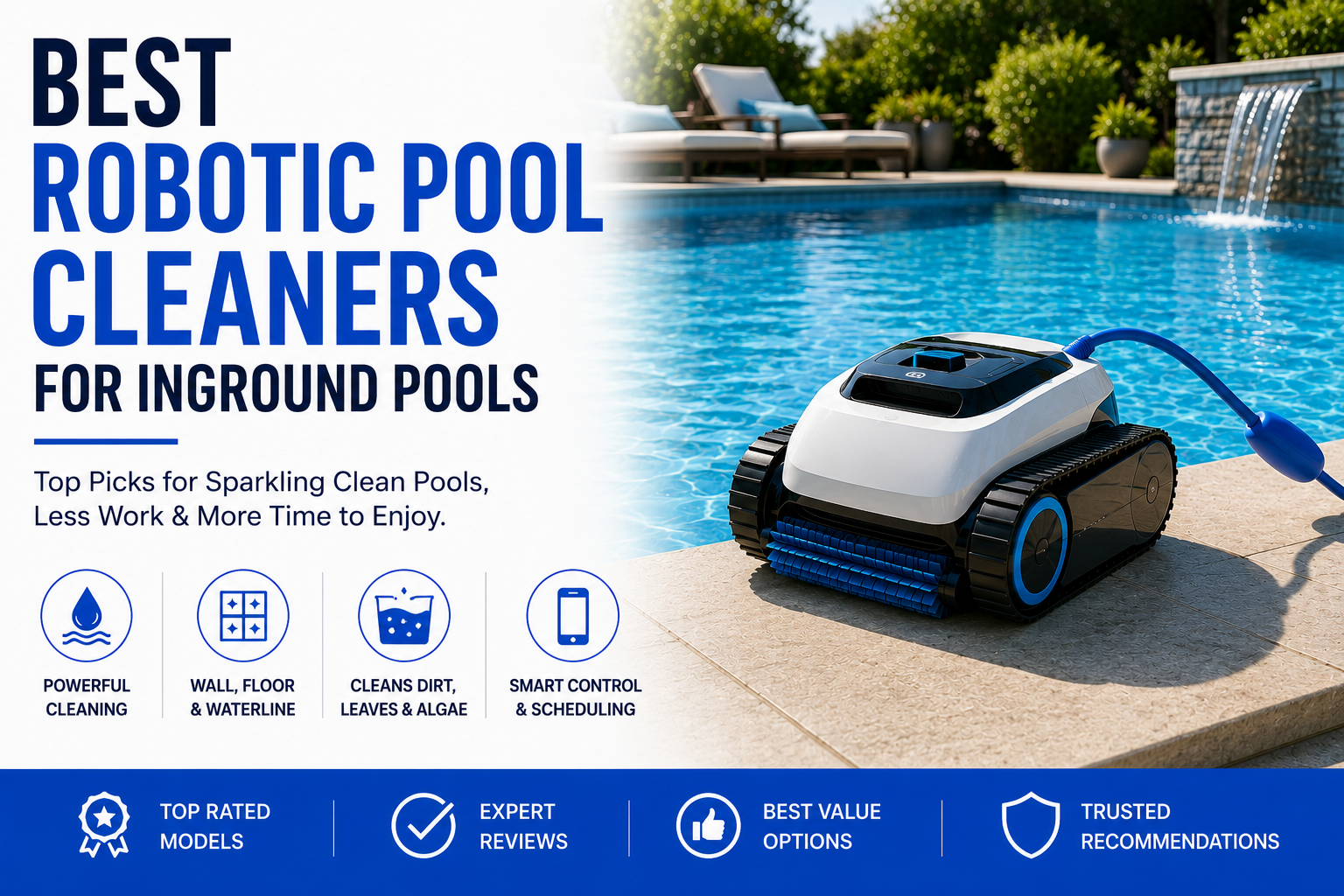
Why Inground Pools Need the Right Robotic Cleaner
Inground pools are often larger, deeper, and more complex than above-ground pools. They may include steps, slopes, corners, deep ends, tile lines, walls, and waterline buildup. Because of that, the best robotic pool cleaner for an inground pool should do more than simply move across the floor.
A strong inground pool robot should provide reliable coverage, active brushing, good filtration, and enough power to clean the pool floor, walls, and sometimes the waterline.
What to Look for in a Robotic Pool Cleaner for Inground Pools
- Pool size compatibility – choose a cleaner rated for your pool length and shape
- Floor and wall cleaning – important for full inground pool coverage
- Waterline cleaning – useful for removing buildup near the surface
- Smart navigation – helps avoid random cleaning and missed areas
- Strong filtration – captures leaves, sand, dirt, algae, and fine debris
- Easy maintenance – simple filter baskets make cleaning faster
Robotic Pool Cleaner Features Compared
| Feature | Why It Matters |
|---|---|
| Wall Climbing | Helps clean vertical pool surfaces instead of only the pool floor. |
| Waterline Cleaning | Targets the ring of dirt, oils, and debris near the water surface. |
| Smart Navigation | Improves cleaning coverage and reduces missed spots. |
| Fine Filtration | Captures smaller debris like sand, dust, pollen, and algae particles. |
| Cordless Design | Removes cord tangles but depends on battery runtime. |
Best Overall Type for Inground Pools
For most inground pools, the best robotic pool cleaner is one that can clean the floor and walls, has strong filtration, includes active brushes, and is rated for the full pool size. If your pool gets a lot of leaves or debris, filter capacity also matters.
If you want easier maintenance, a cordless robotic pool cleaner may be attractive. If you want maximum runtime and consistent power, a corded robotic pool cleaner may still be a strong option.
SEE ROBOTIC POOL CLEANERSBest Robotic Pool Cleaners for Large Inground Pools
Large inground pools need longer cleaning cycles, stronger navigation, and a cleaner rated for bigger pool sizes. A small or underpowered pool robot may miss areas, stop early, or struggle with full coverage.
For large pools, look for extended runtime, wall climbing, strong traction, large filter baskets, and smart route planning.
Best Robotic Pool Cleaners for Leaves and Debris
Leaves are one of the most common problems for inground pool owners. If your pool is near trees, landscaping, or open outdoor areas, choose a robotic cleaner with a larger debris basket and strong suction intake.
Some pool robots are better for fine particles, while others are better for larger debris like leaves, acorns, and bugs. The best choice depends on what your pool collects most often.
Best Robotic Pool Cleaners for Walls and Waterline
Not every robotic pool cleaner can climb walls well. Some are floor-only models, while others can clean walls and waterlines. For inground pools, wall and waterline cleaning can make a big difference because dirt, oils, and algae often collect around the edges.
If you want a more complete clean, prioritize models designed for floor, wall, and waterline coverage.
Corded vs Cordless Robotic Pool Cleaners
Corded robotic pool cleaners usually provide consistent power and longer cleaning cycles, but the cord can sometimes tangle or require more setup. Cordless robotic pool cleaners are easier to place in the pool and remove, but battery life and charging time matter.
If convenience is your top priority, compare our future guide to the best cordless robotic pool cleaners.
Inground vs Above-Ground Pool Cleaners
Some pool cleaners are made for both inground and above-ground pools, while others are designed specifically for one type. Inground pools often need stronger wall climbing, better navigation, and more advanced cleaning coverage.
If you own an above-ground pool instead, compare our guide to the best robotic pool cleaners for above-ground pools.
Are Robotic Pool Cleaners Worth It for Inground Pools?
For many pool owners, robotic pool cleaners are worth it because they reduce manual vacuuming, save time, and help maintain cleaner water. They can also reduce the workload on your main pool filtration system by collecting debris directly inside the robot.
They are especially valuable for busy homeowners, large pools, pools near trees, and anyone who wants less manual pool maintenance. For a deeper breakdown, read our guide: Are Robotic Pool Cleaners Worth It?
Popular Robotic Pool Cleaner Brands
Popular robotic pool cleaner brands include Dolphin, Aiper, Polaris, Hayward, Beatbot, WYBOT, Aquabot, and Maytronics. Each brand offers different strengths depending on pool size, wall climbing, waterline cleaning, cordless convenience, smart navigation, and price.
Future guides may compare Dolphin robotic pool cleaners, Aiper pool robots, cordless pool cleaners, pool robots for leaves, pool robots for large pools, and robotic pool cleaner maintenance.
Common Mistakes When Buying a Pool Robot
- Buying a floor-only cleaner when you need wall cleaning
- Ignoring pool size compatibility
- Choosing cordless without checking battery runtime
- Not checking filter basket size for leaves
- Assuming every model cleans the waterline
- Ignoring replacement parts, filters, and warranty support
Future Buying Guides to Compare
This article is part of the HomeBotGuide robotic pool cleaner cluster. Related and future guides include best robotic pool cleaners, best robotic pool cleaners for above-ground pools, best cordless robotic pool cleaners, are robotic pool cleaners worth it, pool robot maintenance guide, Dolphin vs Aiper, best pool robots for leaves, and best pool cleaners for large pools.
Robotic pool cleaners also connect with the broader world of outdoor home robots, including robot lawn mowers, outdoor security robots, smart home robots, and future home robots coming soon.
Related HomeBotGuide Articles
- Best Robotic Pool Cleaners
- Best Robot Lawn Mowers for Homeowners
- Are Home Robots Worth It?
- Best AI Home Robots
FAQ – Robotic Pool Cleaners for Inground Pools
Do robotic pool cleaners work in inground pools?
Yes, many robotic pool cleaners are designed specifically for inground pools and can clean floors, walls, and sometimes the waterline.
Do I need wall climbing for an inground pool?
Wall climbing is very useful for inground pools because dirt, algae, and debris can collect on vertical surfaces and near the waterline.
Are cordless robotic pool cleaners good for inground pools?
Yes, some cordless robotic pool cleaners work well for inground pools, but battery life, pool size rating, and cleaning coverage are important.
Can a robotic pool cleaner replace manual vacuuming?
For many pool owners, a robotic pool cleaner can greatly reduce manual vacuuming, but occasional brushing or spot cleaning may still be needed.
How often should I run a robotic pool cleaner?
Many pool owners run their robotic cleaner two to three times per week, but pools near trees or heavy debris may need more frequent cleaning.
Do robotic pool cleaners clean the waterline?
Some models clean the waterline, but not all. Check the product details if waterline cleaning is important for your pool.
Which brands make robotic pool cleaners for inground pools?
Popular brands include Dolphin, Aiper, Polaris, Hayward, Beatbot, WYBOT, Aquabot, and Maytronics.
We may earn a commission from qualifying purchases at no extra cost to you.