
Are Robot Lawn Mowers Worth It?
Are robot lawn mowers worth the investment? Learn the advantages, disadvantages, maintenance needs, and long-term value. This guide compares coverage, navigation, slopes, safety, maintenance, and long-term ownership value.
As an Amazon Associate, HomeBotGuide may earn from qualifying purchases at no extra cost to you.
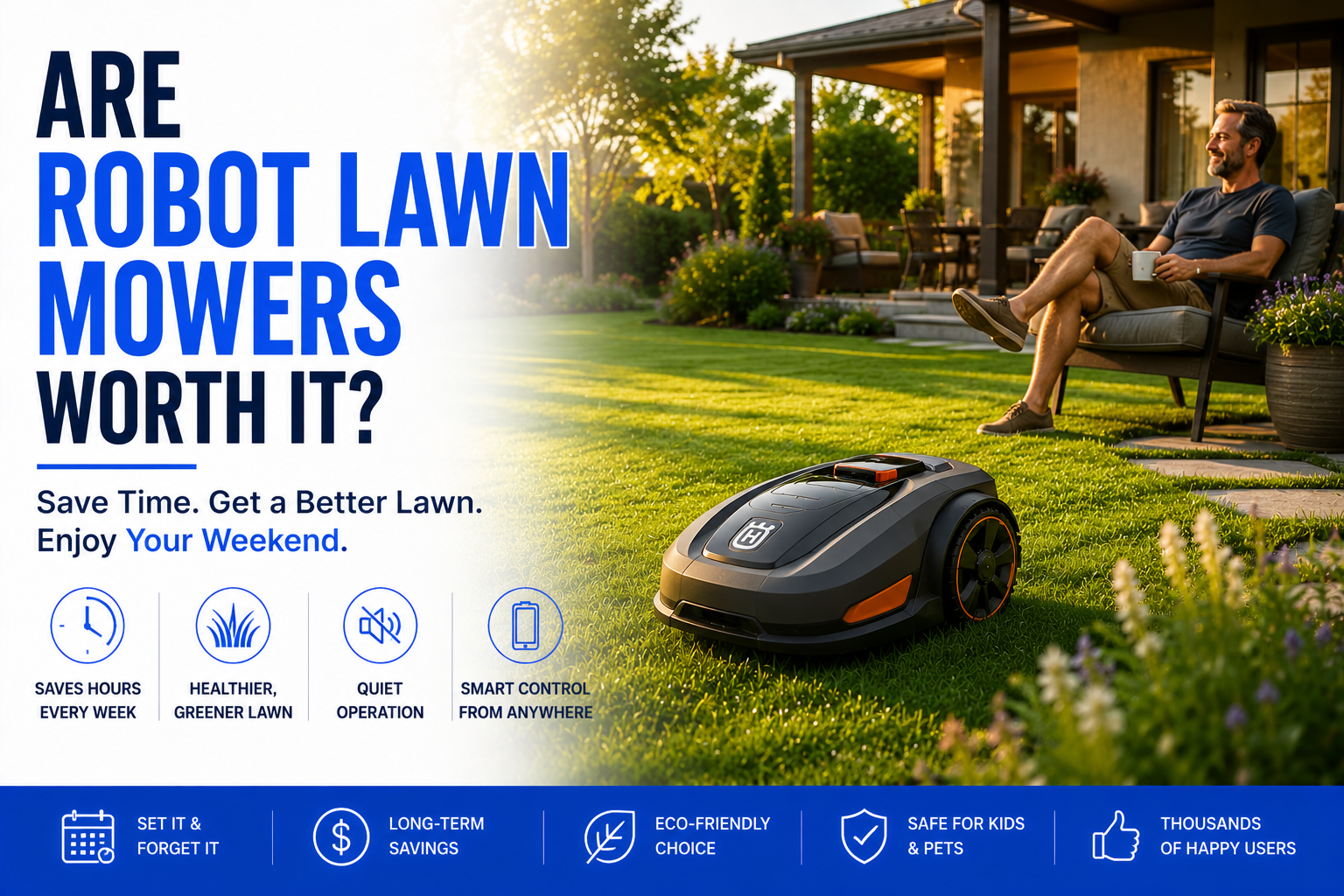
Robot lawn mowers are worth it for homeowners who spend substantial time mowing, have a compatible yard, and value consistent grass height. They are less worthwhile when the lawn has severe slopes, many disconnected zones, poor navigation conditions, or frequent obstacles that require constant intervention.
Are Robot Lawn Mowers Worth It? at a Glance
Frequent automated trimming provides clear time savings.
Reduces weekly mowing time significantly.
Maintains even height with frequent light passes.
Too many obstacles can erase the convenience.
Are Robot Lawn Mowers Worth It? Comparison Table
| Type | Best For | Core Features | Important Limitation |
|---|---|---|---|
| Small Simple Yard | Moderate value | Quiet, frequent mowing | Purchase price may be hard to justify |
| Large Open Yard | High value | Major labor savings | Higher-capacity model required |
| Hilly Yard | Conditional value | Possible with slope-rated model | Traction and safety limits |
| Wire-Free Yard | Strong convenience | Easy virtual boundary changes | Signal dependence |
| Pet Household | Mixed value | Quiet operation | Scheduling and safety management |
| Complex Multi-Zone Yard | Lower value | Potential automation | Manual moves may be required |
What to Consider First
Start with the actual lawn size, slope, shape, passage width, tree cover, obstacles, boundary method, and maintenance tolerance. A mower must fit the property before its smart features matter.
- Measure the lawn instead of relying on lot size.
- Check slope, traction, and edge safety.
- Review navigation and boundary requirements.
- Plan for blades, batteries, docking, and storage.
Main Options to Consider
Quiet, frequent mowing
Major labor savings
Possible with slope-rated model
Easy virtual boundary changes
The Main Value
Robot mowers exchange a high upfront cost for reduced weekly labor and more consistent lawn height.
- Measure the real lawn area, slopes, and narrow passages.
- Confirm boundary, signal, and docking requirements.
- Review blade, wheel, battery, and storage maintenance.
- Schedule operation when children, pets, and wildlife are clear.
Time Savings
The greatest benefit appears when mowing currently takes several hours per month.
- Measure the real lawn area, slopes, and narrow passages.
- Confirm boundary, signal, and docking requirements.
- Review blade, wheel, battery, and storage maintenance.
- Schedule operation when children, pets, and wildlife are clear.
Lawn Quality
Frequent small cuts create fine mulch and avoid the stress of removing too much grass at once.
- Measure the real lawn area, slopes, and narrow passages.
- Confirm boundary, signal, and docking requirements.
- Review blade, wheel, battery, and storage maintenance.
- Schedule operation when children, pets, and wildlife are clear.
Upfront and Ongoing Cost
Include installation, blades, batteries, service, connectivity, repairs, and winter storage.
- Measure the real lawn area, slopes, and narrow passages.
- Confirm boundary, signal, and docking requirements.
- Review blade, wheel, battery, and storage maintenance.
- Schedule operation when children, pets, and wildlife are clear.
Yard Compatibility
Slopes, narrow corridors, disconnected areas, tree cover, and obstacles determine real value.
- Measure the real lawn area, slopes, and narrow passages.
- Confirm boundary, signal, and docking requirements.
- Review blade, wheel, battery, and storage maintenance.
- Schedule operation when children, pets, and wildlife are clear.
Safety and Supervision
Robots need tested boundaries, clear operating windows, and careful scheduling around children, pets, and wildlife.
- Measure the real lawn area, slopes, and narrow passages.
- Confirm boundary, signal, and docking requirements.
- Review blade, wheel, battery, and storage maintenance.
- Schedule operation when children, pets, and wildlife are clear.
Maintenance
Blades, wheels, sensors, underside cleaning, firmware, and batteries still require attention.
- Measure the real lawn area, slopes, and narrow passages.
- Confirm boundary, signal, and docking requirements.
- Review blade, wheel, battery, and storage maintenance.
- Schedule operation when children, pets, and wildlife are clear.
Who Should Wait
Wait when the product cannot reliably navigate the yard or the lawn is too small to justify the investment.
- Measure the real lawn area, slopes, and narrow passages.
- Confirm boundary, signal, and docking requirements.
- Review blade, wheel, battery, and storage maintenance.
- Schedule operation when children, pets, and wildlife are clear.
Robot Mowers Still Need Oversight
Automated mowing reduces weekly labor but still requires boundary testing, lawn preparation, blade replacement, wheel cleaning, safe scheduling, and seasonal storage.
How We Evaluated the Options
We prioritized coverage, navigation, slope ability, traction, safety, cut quality, docking, maintenance, theft protection, replacement parts, warranty, and total ownership value.
Final Verdict
Robot lawn mowers are worth it for homeowners who spend substantial time mowing, have a compatible yard, and value consistent grass height. They are less worthwhile when the lawn has severe slopes, many disconnected zones, poor navigation conditions, or frequent obstacles that require constant intervention.
Are Robot Lawn Mowers Worth It? FAQ
Are robot lawn mowers worth the money?
They are when mowing is frequent, time-consuming, and the yard is compatible.
Do they save money over lawn service?
They can over time, but purchase and maintenance costs must be included.
Do they improve lawn quality?
Frequent small cuts can keep height more consistent.
Are they safe?
They include safety sensors, but scheduling and supervision remain important.
How much maintenance do they need?
Blade replacement, cleaning, wheel checks, software updates, and battery care.
Do they work on slopes?
Some do, but slope ratings vary widely.
Do they need boundary wire?
Some do; others use GPS, RTK, vision, or beacons.
How long do they last?
Useful life depends on battery, parts, workload, and support.
Are they good for small yards?
Yes, though the financial value may be lower.
What is the biggest downside?
High upfront cost and limited performance in complex yards.