
Robotic Pool Cleaner Buying Guide: How to Choose the Right Pool Robot
Choosing the right robotic pool cleaner depends on your pool type, pool size, surface, debris level, budget, cleaning expectations, and whether you need floor-only cleaning, wall climbing, waterline scrubbing, cordless operation, smart navigation, or heavy-duty filtration. This buying guide explains how to choose a robotic pool cleaner for above-ground pools, inground pools, small pools, large pools, leaves, sand, fine debris, and easier pool maintenance.
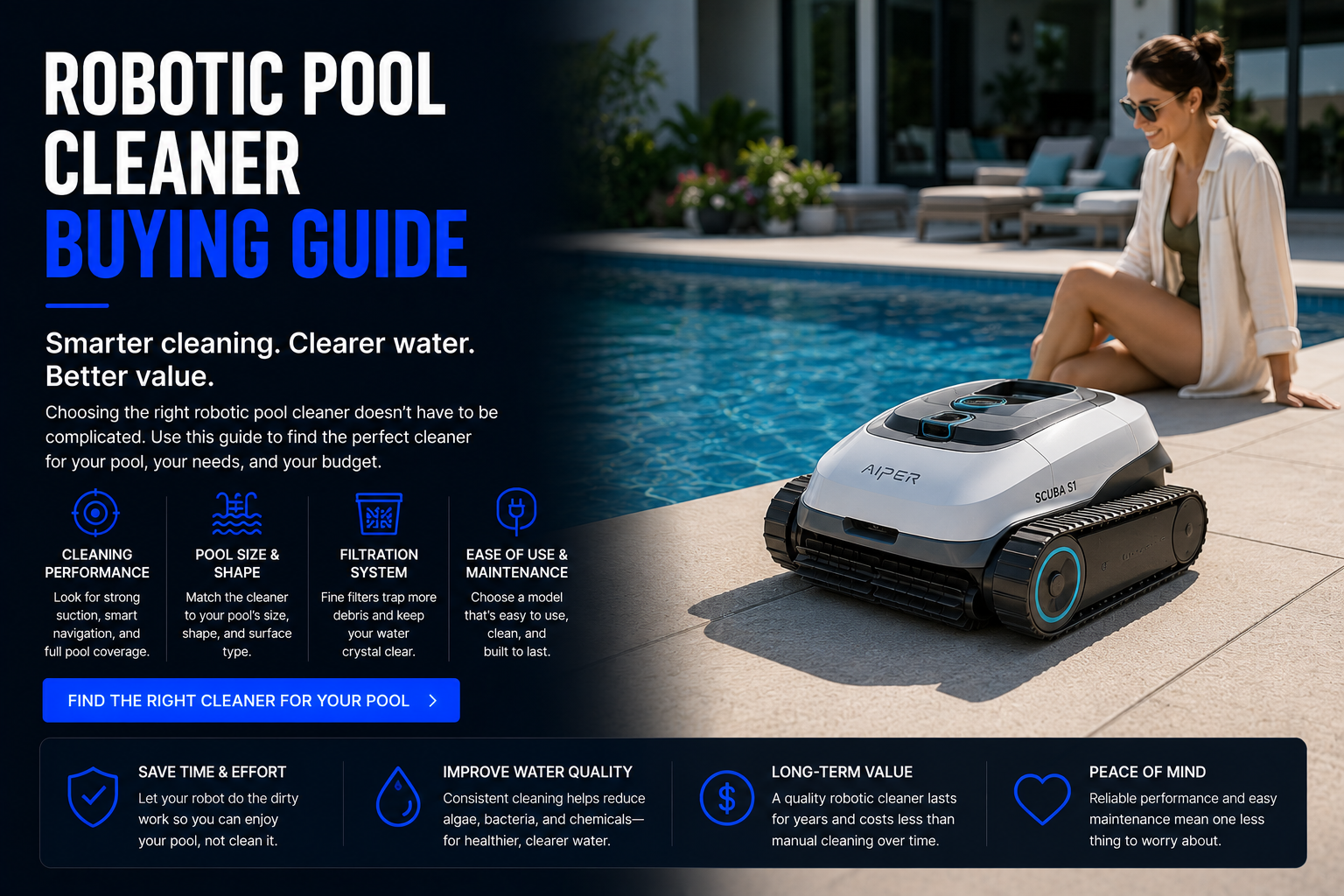
How Do You Choose the Right Robotic Pool Cleaner?
To choose the right robotic pool cleaner, start with your pool type and pool size. Then compare whether you need a floor-only robotic pool cleaner, a wall-climbing pool robot, a cordless robotic pool cleaner, a corded cleaner, or a premium smart robotic pool cleaner with advanced navigation and waterline cleaning.
The best robotic pool cleaner is not always the most expensive model. A small above-ground pool may only need a lightweight budget robotic cleaner, while a large inground pool with trees nearby may need stronger suction, a larger filter basket, better wall climbing, and more complete pool coverage.
Robotic pool cleaners can reduce manual vacuuming, collect leaves, dirt, bugs, sand, pollen, and fine debris, and make pool maintenance easier. But they do not replace every part of pool care. You still need water testing, chemical balancing, skimming, filter maintenance, brushing, and proper pool equipment care.
Quick answer: choose a robotic pool cleaner based on pool type, size, debris, surface, corded vs cordless design, floor vs wall cleaning, filter quality, weight, maintenance, and long-term replacement parts.
What Is a Robotic Pool Cleaner?
A robotic pool cleaner is an automatic pool cleaning machine that moves through the water using its own motor, filter system, brushes, wheels, tracks, or navigation system. Unlike manual pool vacuums, robotic pool cleaners work independently from most pool filtration systems and collect debris inside their own filter basket or cartridge.
The category includes budget robotic pool cleaners, cordless robotic pool cleaners, corded robotic pool cleaners, above-ground pool robots, inground pool robots, wall-climbing pool cleaners, waterline pool cleaners, smart pool robots, and premium pool cleaning systems with advanced navigation.
Robotic pool cleaners are popular because they can reduce manual cleaning time and help keep pool floors, walls, and sometimes waterlines cleaner depending on the model.
Robotic Pool Cleaner Buying Guide
Choose by Pool Type
The first buying decision is whether your pool is above-ground, inground, or both. Some robotic pool cleaners are designed specifically for above-ground pools, while others are built for inground pools with deeper areas, slopes, walls, and more complex shapes.
A cleaner made for a small above-ground pool may not have enough power, cable length, battery runtime, traction, or climbing ability for a large inground pool. Always match the pool robot to the type of pool you own.
Measure Pool Size and Cleaning Area
Pool size affects cable length, battery runtime, cleaning cycle time, suction needs, and debris basket capacity. For corded robotic pool cleaners, the cable must be long enough to reach the full pool. For cordless pool robots, the battery must last long enough to finish the cleaning cycle.
If your pool is large, deep, or irregularly shaped, choose a cleaner rated for more coverage than the minimum. A pool robot that is too small may miss areas or require multiple cycles.
Decide Between Floor-Only and Wall-Climbing Cleaning
Floor-only robotic pool cleaners are usually more affordable and can work well if most debris settles on the pool bottom. Wall-climbing robotic pool cleaners can clean more surfaces and are usually better for inground pools, deeper pools, and pools with buildup on walls.
Waterline scrubbing is another premium feature. If your pool often has waterline buildup, sunscreen residue, pollen, or grime near the surface, a cleaner with waterline cleaning may be worth considering.
Choose Corded or Cordless
Cordless robotic pool cleaners are convenient because there is no floating power cable. They are easy to place in the pool, reduce cord tangles, and are popular for above-ground pools and smaller pool layouts.
Corded robotic pool cleaners offer consistent power and can be better for longer cleaning sessions or larger inground pools. The downside is cable handling, storage, and possible tangling depending on the design.
Check Debris and Filter Type
Different pools collect different debris. A pool surrounded by trees may need a larger basket for leaves and acorns. A screened pool may mostly collect fine dust, sand, pollen, and small debris. The filter system should match your most common debris.
Look for easy-to-clean filter baskets, fine filter options, large debris capacity, and simple removal. A pool robot that is hard to clean can become annoying even if it cleans well.
Check Pool Surface Compatibility
Pool surfaces include vinyl, fiberglass, concrete, plaster, tile, pebble, and other finishes. Not every robotic pool cleaner works equally well on every surface. Brush type, traction, tracks, wheels, suction, and climbing ability may vary by surface.
Before buying, confirm that the cleaner is compatible with your pool surface. This is especially important for vinyl liners, delicate surfaces, or pools with unusual shapes.
Consider Weight and Handling
Robotic pool cleaners become heavier when removed from the water. If the cleaner is too heavy, cleaning the filter, lifting it out, and storing it can become difficult.
Lightweight cordless cleaners are easier to handle, but they may have shorter runtime or smaller filter baskets. Larger premium cleaners may clean better but require more effort to lift and rinse.
Compare Smart Features
Some robotic pool cleaners include app controls, cleaning modes, scheduled cleaning, cycle selection, smart navigation, waterline mode, remote steering, or cleaning history. These features can be useful, but not every pool owner needs them.
For basic pool maintenance, simple controls may be enough. For larger inground pools, smart navigation and app control may improve convenience and coverage.
Check Maintenance and Replacement Parts
Robotic pool cleaners need regular filter cleaning, brush inspection, cable care, battery care, track or wheel checks, and proper storage. Replacement parts may include filters, brushes, tracks, wheels, batteries, chargers, cords, baskets, and seals.
Before buying, check whether replacement parts are easy to find. A pool robot is a better long-term purchase when filters and parts are available.
Robotic Pool Cleaner Types Compared
| Cleaner Type | Best For | Main Benefit | Possible Downside |
|---|---|---|---|
| Budget Robotic Pool Cleaner | Simple pools and first-time buyers | Lower price and easier entry | Fewer advanced features |
| Cordless Robotic Pool Cleaner | Small pools and cable-free cleaning | No cord tangles and easy setup | Battery runtime limits coverage |
| Corded Robotic Pool Cleaner | Larger pools and longer cycles | Consistent power | Cable management required |
| Floor-Only Pool Robot | Bottom debris | Affordable and simple | Does not clean walls or waterline |
| Wall-Climbing Pool Robot | Inground pools | Cleans more pool surfaces | Usually costs more |
| Premium Smart Pool Robot | Large or complex pools | Better navigation and smart features | Higher upfront cost |
Best Robotic Pool Cleaner by Pool Type
Above-Ground Pools
Above-ground pools usually need lightweight, affordable, easy-to-remove robotic cleaners with simple filter baskets and enough runtime for smaller pool sizes.
Inground Pools
Inground pools often benefit from stronger cleaners with wall climbing, longer cables or runtime, larger baskets, and better traction.
Small Pools
Small pools may not need premium navigation. A budget or cordless robotic pool cleaner can often handle basic floor debris.
Large Pools
Large pools need longer cleaning cycles, stronger coverage, larger filter capacity, and better cleaning path efficiency.
Pools with Leaves
Pools near trees need large debris baskets, strong intake, and filters that do not clog quickly with leaves and acorns.
Pools with Sand or Fine Dirt
Fine debris requires better filtration. Look for fine filter cartridges or baskets designed for sand, silt, pollen, and dust.
Budget vs Premium Robotic Pool Cleaners
Budget robotic pool cleaners are best for simple pool floor cleaning, above-ground pools, small inground pools, and homeowners who want less manual vacuuming without a high price. They usually focus on basic debris pickup and may have fewer smart features.
Premium robotic pool cleaners may include stronger wall climbing, waterline scrubbing, smart navigation, app control, larger baskets, better fine-debris filtration, multiple cleaning modes, and better performance in larger or more complex pools.
The best value depends on your pool. If you have a simple pool, a budget cleaner may be enough. If your pool is large, deep, heavily shaded, surrounded by trees, or needs walls and waterline cleaned often, a premium cleaner may be a better long-term purchase.
Cordless vs Corded Robotic Pool Cleaners
Cordless robotic pool cleaners are easier to use because there is no power cable in the water. They are popular for above-ground pools, smaller inground pools, and users who want simple drop-in cleaning.
Corded robotic pool cleaners are often better for larger pools because they can run longer and maintain consistent power. The main drawback is managing the cable and storing it properly after cleaning.
Choose cordless if ease of use matters most and your pool is not too large. Choose corded if runtime, power consistency, and larger pool coverage matter more.
Robotic Pool Cleaner vs Manual Pool Vacuum
A manual pool vacuum gives you direct control and can be useful for spot cleaning, heavy debris, and targeted pool maintenance. A robotic pool cleaner automates much of the cleaning process and can reduce the time you spend vacuuming by hand.
Robotic pool cleaners are better for convenience and routine maintenance. Manual vacuuming is still useful for unusual messes, algae cleanup, heavy sediment, and areas the robot may miss.
For many pool owners, the best system is both: a robotic pool cleaner for regular cleaning and manual tools for special cleanup, brushing, waterline care, and detailed maintenance.
Robotic Pool Cleaner Features That Matter Most
- Pool compatibility: Make sure the cleaner works with above-ground, inground, or your specific pool type.
- Pool size rating: Match cable length or battery runtime to your pool dimensions.
- Filter basket: Choose a basket that handles leaves, sand, fine dirt, or your main debris type.
- Wall climbing: Important for inground pools and full-surface cleaning.
- Waterline scrubbing: Useful for pools with surface-line buildup and residue.
- Weight: A lighter cleaner is easier to lift, rinse, and store.
- Cleaning cycles: Multiple cycle lengths can help match light or heavy debris days.
- Smart controls: App controls and navigation features can improve convenience.
- Replacement parts: Filters, brushes, tracks, chargers, and batteries should be available.
Common Robotic Pool Cleaner Buying Mistakes
- Buying the wrong pool type: Above-ground and inground pool cleaners are not always interchangeable.
- Ignoring pool size: Runtime or cable length must match your pool.
- Expecting wall cleaning from a floor-only model: Many affordable models only clean the pool floor.
- Forgetting filter type: Leaves and fine sand require different filtration needs.
- Ignoring weight: Pool robots are heavier when lifted from water.
- Not checking surface compatibility: Vinyl, fiberglass, concrete, plaster, and tile may need different brush designs.
- Choosing only by price: The cheapest pool robot may not fit your pool’s cleaning needs.
- Forgetting maintenance: Dirty filters, clogged baskets, worn brushes, and poor storage reduce performance.
Are Robotic Pool Cleaners Worth It?
Robotic pool cleaners are worth it for many pool owners because they reduce manual vacuuming, save time, collect debris, and make routine pool maintenance easier. They are especially useful for homeowners who clean the pool often, deal with leaves or dirt, or want a more automated maintenance routine.
They are not perfect. A robotic pool cleaner does not replace water testing, chemical balancing, skimming, brushing, filter care, or full pool service. Some models may miss steps, tight corners, waterlines, or unusual pool shapes.
The right robotic pool cleaner can be one of the most useful home maintenance robots for pool owners, especially when matched correctly to the pool size, surface, and debris level.
Future of Robotic Pool Cleaners
Robotic pool cleaners are becoming smarter as battery technology, sensors, filtration, app controls, and robotic navigation improve. Future pool robots may include better cordless runtime, smarter mapping, stronger wall climbing, improved fine-debris filtration, waterline detection, and more reliable cleaning cycles.
Over time, robotic pool cleaners may connect more closely with smart pool systems, home maintenance robots, AI home robots, home monitoring robots, outdoor sensors, water quality systems, and smart home routines. Future pool robots may adjust cleaning based on debris levels, weather, pool use, water quality, and seasonal conditions.
For pool owners, this means robotic pool cleaners should become easier to use, easier to maintain, and more integrated with the rest of the smart home.
Related Robotic Pool Cleaner Guides
Related Home Robot Guides
Robotic Pool Cleaner Buying Guide FAQ
How do I choose the right robotic pool cleaner?
Choose a robotic pool cleaner based on your pool type, size, surface, debris level, budget, corded or cordless preference, and whether you need floor-only cleaning, wall climbing, or waterline scrubbing.
What is the best robotic pool cleaner for most people?
For most pool owners, the best robotic pool cleaner is one that matches the pool size, handles common debris, has an easy-clean filter basket, and provides reliable floor coverage.
Should I buy a cordless or corded robotic pool cleaner?
Choose cordless for convenience and smaller pools. Choose corded for larger pools, longer cleaning cycles, and consistent power.
Do robotic pool cleaners clean walls?
Some robotic pool cleaners clean walls, but many budget models are floor-only. Check the model specifications before buying.
Do robotic pool cleaners clean the waterline?
Some premium robotic pool cleaners scrub the waterline, but not all models include this feature.
Are robotic pool cleaners good for above-ground pools?
Yes, many robotic pool cleaners are designed specifically for above-ground pools and can make routine cleaning much easier.
Are robotic pool cleaners good for inground pools?
Yes, inground pools can benefit from robotic cleaners, especially models with wall climbing, larger debris baskets, and longer cleaning coverage.
Can robotic pool cleaners pick up leaves?
Many robotic pool cleaners can pick up leaves, but pools with heavy leaf debris need a larger basket and strong intake.
Can robotic pool cleaners remove sand?
Some robotic pool cleaners remove sand and fine debris well, but you need the right filter type for small particles.
Do robotic pool cleaners replace pool service?
No. They reduce manual vacuuming, but they do not replace chemical balancing, water testing, skimming, brushing, or full pool maintenance.
How often should I use a robotic pool cleaner?
Many pool owners use a robotic cleaner several times per week depending on debris, pool usage, weather, and surrounding trees.
How do I maintain a robotic pool cleaner?
Clean the filter basket, rinse filters, inspect brushes, check cords or batteries, clean tracks or wheels, and store the cleaner properly.
Are budget robotic pool cleaners worth it?
Budget robotic pool cleaners can be worth it for small pools, above-ground pools, simple inground pools, and homeowners who mainly need floor cleaning.
What features matter most in a pool robot?
The most important features are pool compatibility, size rating, filter quality, debris handling, floor coverage, wall climbing, corded or cordless design, weight, and replacement parts.
How long do robotic pool cleaners last?
Lifespan depends on build quality, usage, water chemistry, maintenance, storage, and availability of replacement parts.
Shop Robotic Pool Cleaners
The right robotic pool cleaner should match your pool type, size, debris level, surface, and maintenance expectations. Compare cordless pool robots, corded robotic pool cleaners, above-ground pool cleaners, inground pool cleaners, wall-climbing robots, budget pool cleaners, and smart pool cleaning systems before choosing the best option for your pool.
Shop Robotic Pool Cleaners