
Are Healthcare Robots Worth It?
Learn whether healthcare robots are worth buying for seniors, families, home care, reminders, monitoring, independence, and everyday assistance. Healthcare robots can support routines, communication, reminders, and independence, but they do not replace qualified care, diagnosis, treatment, supervision, or emergency services.
As an Amazon Associate, HomeBotGuide may earn from qualifying purchases at no extra cost to you.
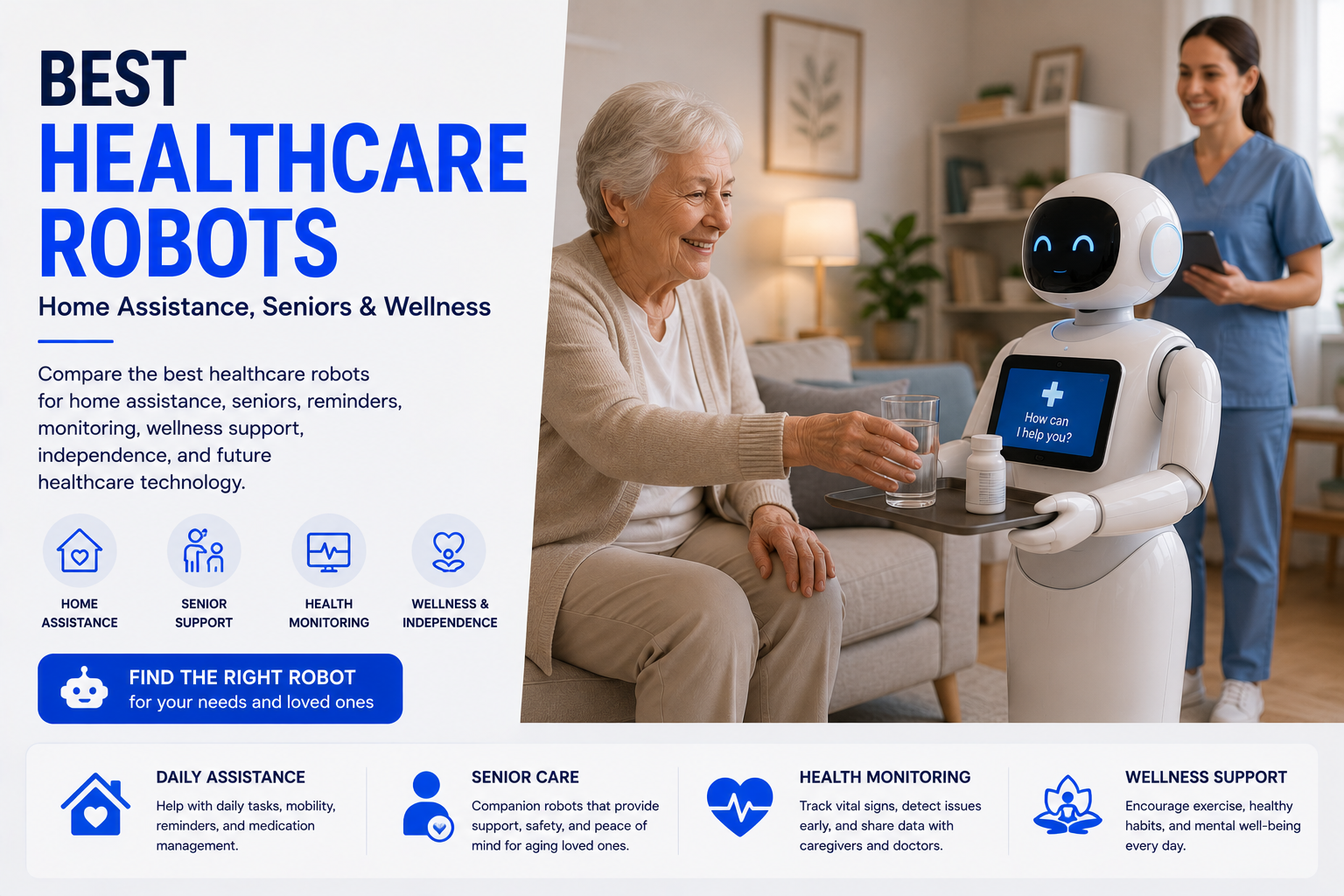
Healthcare robots are worth it when they solve a defined problem such as missed routines, social isolation, difficult family check-ins, or limited access to simple reminders and activities. They are not worth it when buyers expect medical diagnosis, emergency protection, physical caregiving, or fully independent operation.
Are Healthcare Robots Worth It? at a Glance
Appointments, hydration, routines, exercise, and family communication.
Video calls, messages, and visual home contact.
Conversation, music, games, activities, and social prompts.
Assuming the robot replaces care, supervision, or emergency services.
Are Healthcare Robots Worth It? Comparison Table
| Option | Best For | Core Features | Important Limitation |
|---|---|---|---|
| Companion Robot | Engagement and routines | Conversation, reminders, calls | Subscription and limited physical help |
| Telepresence Robot | Family access | Remote navigation and video | Cost and privacy |
| Monitoring Robot | Visual checks | Camera, audio, patrols | Missed events and connectivity |
| Medication Device | Routine support | Alerts and caregiver notices | Cannot ensure correct use |
| Medical Alert Service | Emergency support | Call center and wearable | Not a robot or companion |
| Hybrid Care Setup | Broad support | Robot, sensors, caregivers | Highest coordination needs |
What Healthcare Robots Can Actually Do
Home healthcare robots may provide reminders, communication, conversation, telepresence, routine monitoring, activities, and selected smart-home control. Their value is strongest when they perform one clear support role reliably.
They cannot independently diagnose illness, provide hands-on care, guarantee emergency response, or replace qualified professionals and family caregivers.
- Deliver reminders and structured routines.
- Support family and caregiver communication.
- Provide activities, engagement, and companionship.
- Enable selected mobile or stationary check-ins.
- Share limited updates with authorized users.
Main Types to Consider
Conversation, reminders, calls
Remote navigation and video
Camera, audio, patrols
Alerts and caregiver notices
Benefits That Can Justify the Cost
Robots can increase routine consistency, provide easy family communication, offer activities, reduce some repetitive check-ins, and help older adults interact with technology through voice or a simplified interface.
- Confirm the exact support goal and intended user.
- Verify privacy, permissions, and remote-access controls.
- Review subscriptions, updates, and service support.
- Maintain human and emergency backup plans.
Costs Beyond the Purchase Price
Total cost may include subscription fees, connectivity, cloud services, accessories, replacement parts, battery service, setup, training, technical support, and the time family members spend managing the system.
- Confirm the exact support goal and intended user.
- Verify privacy, permissions, and remote-access controls.
- Review subscriptions, updates, and service support.
- Maintain human and emergency backup plans.
Limits That Reduce Value
Robots cannot climb every stair, provide personal care, understand every health change, confirm medication use, guarantee emergency response, or function reliably through every outage or software problem.
- Confirm the exact support goal and intended user.
- Verify privacy, permissions, and remote-access controls.
- Review subscriptions, updates, and service support.
- Maintain human and emergency backup plans.
Who Benefits Most
The strongest fit is a willing user who enjoys technology, has stable internet, has family or caregiver support, and needs reminders, engagement, or communication rather than hands-on care.
- Confirm the exact support goal and intended user.
- Verify privacy, permissions, and remote-access controls.
- Review subscriptions, updates, and service support.
- Maintain human and emergency backup plans.
Robots Support Care—They Do Not Replace It
Consumer robots can fail, misunderstand commands, miss events, lose connectivity, or create false reassurance.
Use qualified healthcare professionals, caregivers, medical alert systems, smoke and carbon-monoxide alarms, medication-management services, and emergency services whenever those protections are needed.
Reminders, Monitoring, and Alerts
Evaluate which reminders are delivered, how caregivers confirm them, whether alerts can be escalated, and what happens when the user does not respond. A notification is not the same as a completed care task.
Privacy, Consent, and Dignity
Healthcare robots may collect voice, video, routines, wellness information, medication schedules, and family communications. Use informed consent, limited accounts, secure authentication, minimal recording, and clear controls for disabling cameras and microphones.
Connectivity, Accessibility, and Support
Test voice recognition, screen readability, hearing support, language, Wi-Fi coverage, physical controls, caregiver setup, troubleshooting, and outage behavior in the actual home.
Subscriptions and Long-Term Ownership
Include hardware, service plans, family apps, cloud features, replacement parts, batteries, connectivity, technical support, and the risk that cloud-dependent features may change or end.
How to Build a Safe Care Plan
Assign the robot a narrow support role.
Limit access and recording clearly.
Plan for outages, missed alerts, and low battery.
Maintain caregivers and emergency response.
How We Evaluated the Options
We prioritized usefulness, accessibility, reminders, communication, privacy, consent, reliability, outage behavior, caregiver access, subscription cost, intended use, support, software updates, emergency limitations, and integration with human care.
Final Verdict
Healthcare robots are worth it when they solve a defined problem such as missed routines, social isolation, difficult family check-ins, or limited access to simple reminders and activities. They are not worth it when buyers expect medical diagnosis, emergency protection, physical caregiving, or fully independent operation.
Are Healthcare Robots Worth It? FAQ
How much do healthcare robots cost?
Costs range from consumer subscription-based companion devices to expensive telepresence and professional systems, with ongoing service fees often significant.
Do healthcare robots require subscriptions?
Many companion, monitoring, cloud, and family-access features require monthly or annual service.
Can a healthcare robot save money?
It may reduce some routine support time, but it does not replace care hours that involve judgment, physical assistance, or medical tasks.
Who should buy a healthcare robot?
It is best for a willing user with a clear need, reliable connectivity, and family or caregiver support.
Who should avoid one?
People who dislike cameras or technology, need hands-on care, lack reliable internet, or may become confused by the device may need a different solution.
Can a robot improve independence?
It can support reminders, routines, communication, and engagement, but true independence also depends on health, housing, mobility, and human support.
Are healthcare robots medical devices?
Some robotic systems or software functions may be regulated medical devices, while many home companion robots are consumer products.
What happens if the company stops supporting the robot?
Cloud features, apps, updates, or subscriptions may stop, so buyers should review service history and offline functionality.
Can a robot reduce loneliness?
It may increase engagement for some users, but it should supplement rather than replace human connection.
What makes a healthcare robot worth buying?
A clear daily use case, willing user, reliable support, realistic expectations, and measurable improvement in routines or communication.