
Best Robot Mops
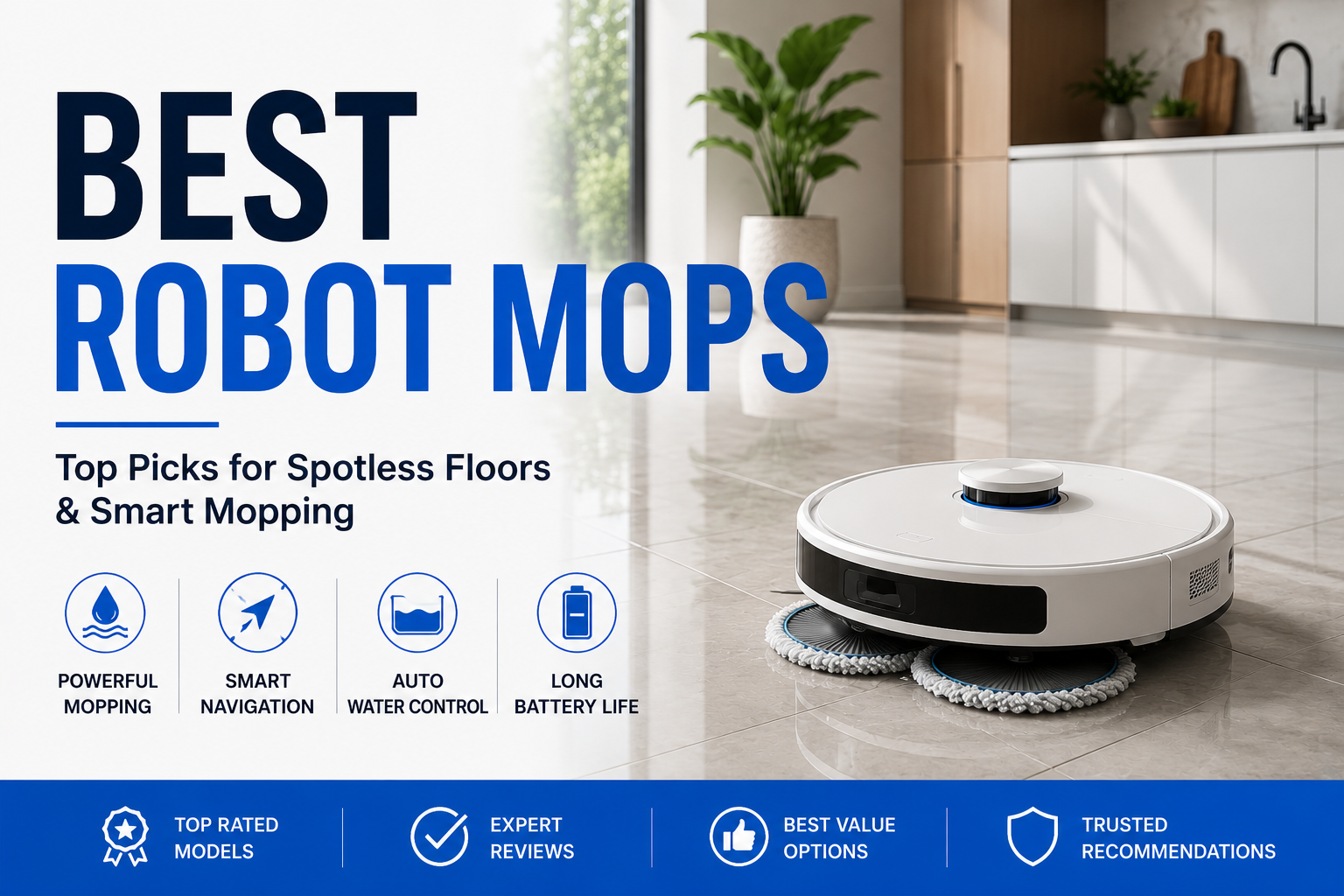
Discover the best robot mops for tile, hardwood, laminate, and vinyl floors. Compare features, cleaning performance, smart mapping, and value. This guide compares the main cleaning systems, floor compatibility, practical tradeoffs, maintenance needs, and long-term value.
As an Amazon Associate, HomeBotGuide may earn from qualifying purchases at no extra cost to you.
The best robot mop for most homes uses active scrubbing, controlled water flow, accurate mapping, and a dock that washes and dries the pads. Passive drag-pad models are less expensive and useful for light dust, but they do not remove dried spills or sticky residue as effectively.
Best Robot Mops at a Glance
Active scrubbing and strong everyday hard-floor cleaning.
Controlled moisture and even pressure for sealed surfaces.
Automates pad washing, refilling, and drying.
Simple maintenance wiping with a lower entry cost.
Best Robot Mops Comparison Table
| Type | Best For | Core Features | Important Limitation |
|---|---|---|---|
| Dual Spinning Pads | Tile and sealed floors | Active scrubbing and edge coverage | Pads need frequent washing |
| Vibrating Mop Plate | Hardwood and laminate | Controlled water and rapid agitation | Less effective on heavy grime |
| Roller Mop Robot | Frequent wet cleaning | Continuous roller contact and rinsing | More complex maintenance |
| Passive Drag Pad | Light dust and footprints | Simple and affordable | Minimal scrubbing force |
| Self-Washing Dock | Busy homes | Pad washing, water refill, drying | Higher price and dock upkeep |
| Vacuum-and-Mop Combo | Mixed debris and stains | Dry pickup plus mopping | Compromise between two functions |
What to Consider First
Start with floor compatibility, hard-floor area, moisture tolerance, cleaning frequency, and how much dock and pad maintenance you are willing to perform.
- Verify floor and finish compatibility.
- Choose the right scrubbing and water-control system.
- Review carpet handling and no-mop zones.
- Plan for pad, tank, tray, and dock cleaning.
Main Options to Consider
Active scrubbing and edge coverage
Controlled water and rapid agitation
Continuous roller contact and rinsing
Simple and affordable
What Makes a Robot Mop Effective
Cleaning performance depends on pad movement, downward pressure, water control, navigation, and whether dry debris is removed before mopping.
- Confirm the floor is compatible with damp robotic cleaning.
- Remove dry debris before wet cleaning.
- Review pad, tank, tray, and dock maintenance.
- Keep a manual mop available for deep cleaning.
Active Scrubbing vs Passive Wiping
Spinning pads, vibrating plates, and roller systems apply more motion than a cloth dragged behind the robot. Passive pads work best for maintenance rather than stain removal.
- Confirm the floor is compatible with damp robotic cleaning.
- Remove dry debris before wet cleaning.
- Review pad, tank, tray, and dock maintenance.
- Keep a manual mop available for deep cleaning.
Water Flow and Floor Safety
Use the lowest effective water level and follow the flooring manufacturer's guidance. Excess water can damage seams and leave streaks.
- Confirm the floor is compatible with damp robotic cleaning.
- Remove dry debris before wet cleaning.
- Review pad, tank, tray, and dock maintenance.
- Keep a manual mop available for deep cleaning.
Mapping and Room Control
Accurate maps allow room-specific water settings, no-mop zones, and targeted cleaning around kitchens and entryways.
- Confirm the floor is compatible with damp robotic cleaning.
- Remove dry debris before wet cleaning.
- Review pad, tank, tray, and dock maintenance.
- Keep a manual mop available for deep cleaning.
Dock Automation
Advanced docks wash pads, refill clean water, collect dirty water, and dry the mop. They save time but create more tanks, trays, filters, and odor-control tasks.
- Confirm the floor is compatible with damp robotic cleaning.
- Remove dry debris before wet cleaning.
- Review pad, tank, tray, and dock maintenance.
- Keep a manual mop available for deep cleaning.
Edge and Corner Cleaning
Round robots may leave a narrow strip near baseboards. Swing-out pads and edge modes improve coverage but still do not replace occasional manual detail work.
- Confirm the floor is compatible with damp robotic cleaning.
- Remove dry debris before wet cleaning.
- Review pad, tank, tray, and dock maintenance.
- Keep a manual mop available for deep cleaning.
Cleaning Solution Compatibility
Use only approved solutions because foaming or corrosive products can damage pumps, tubing, seals, and flooring.
- Confirm the floor is compatible with damp robotic cleaning.
- Remove dry debris before wet cleaning.
- Review pad, tank, tray, and dock maintenance.
- Keep a manual mop available for deep cleaning.
Maintenance Routine
Wash pads, empty dirty-water tanks, rinse trays, clear hair, clean sensors, and dry components to prevent odor and buildup.
- Confirm the floor is compatible with damp robotic cleaning.
- Remove dry debris before wet cleaning.
- Review pad, tank, tray, and dock maintenance.
- Keep a manual mop available for deep cleaning.
Robot Mops Still Need Oversight
Automated mopping reduces routine work but does not replace floor preparation, spill cleanup, pad washing, tank maintenance, grout care, or periodic manual deep cleaning.
How We Evaluated the Options
We prioritized scrubbing action, water control, mapping, floor safety, carpet avoidance, pad care, dock reliability, maintenance, consumable cost, warranty, and total ownership value.
Final Verdict
The best robot mop for most homes uses active scrubbing, controlled water flow, accurate mapping, and a dock that washes and dries the pads. Passive drag-pad models are less expensive and useful for light dust, but they do not remove dried spills or sticky residue as effectively.
Best Robot Mops FAQ
Are robot mops effective?
They are effective for routine hard-floor maintenance, especially models with active scrubbing.
Can robot mops replace manual mopping?
They reduce manual frequency but do not eliminate periodic deep cleaning.
Which mop type cleans best?
Spinning, vibrating, and roller systems generally outperform passive pads.
Are robot mops safe for hardwood?
Only when the floor permits damp cleaning and water flow is controlled.
Do robot mops avoid rugs?
Many use carpet detection or no-mop zones, but testing is still necessary.
How often should pads be washed?
After dirty runs or according to the dock's wash cycle.
Can I use regular floor cleaner?
Only if both the robot and flooring manufacturer approve it.
Do self-washing docks smell?
They can if tanks, trays, and pads are not cleaned and dried.
Are robot mops good for pet homes?
Yes for paw prints and fine dust, but pet accidents require manual cleanup.
What is the biggest limitation?
Corners, grout, and dried spills still need manual attention.