
Best Robot Mops for Tile Floors
Compare the best robot mops for tile floors. Find models with strong scrubbing performance, smart navigation, and excellent cleaning results. This guide compares the main cleaning systems, floor compatibility, practical tradeoffs, maintenance needs, and long-term value.
As an Amazon Associate, HomeBotGuide may earn from qualifying purchases at no extra cost to you.
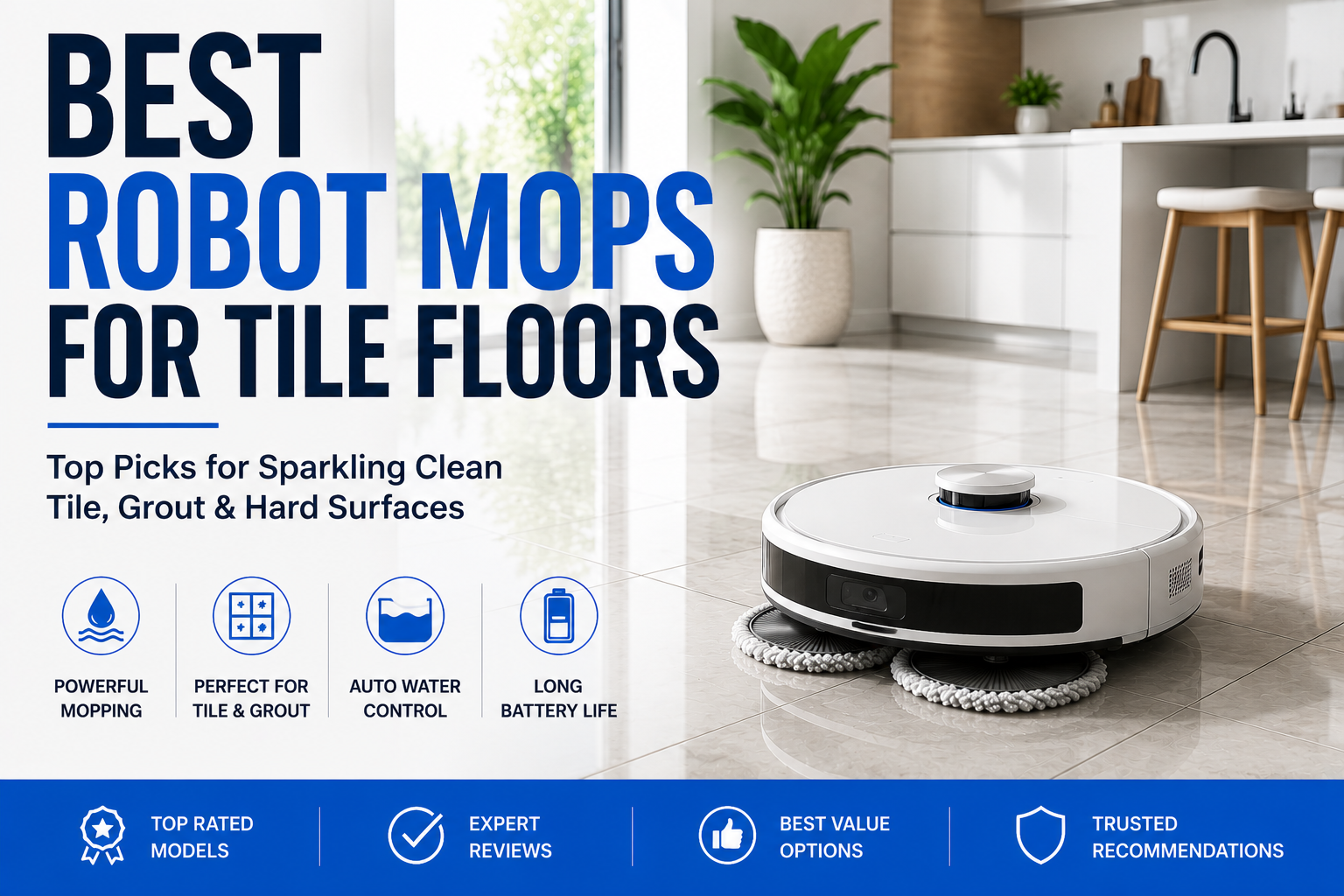
The best robot mop for tile floors uses active scrubbing, enough water to loosen soil without flooding grout, accurate mapping, and washable pads. For textured tile or wide grout lines, prioritize spinning pads or roller systems and expect occasional manual grout cleaning.
Best Robot Mops for Tile Floors at a Glance
Strong agitation for smooth and lightly textured tile.
Automates repeated cleaning across kitchens and open floors.
Removes grit before applying moisture.
Suitable for light dust on smooth tile.
Best Robot Mops for Tile Floors Comparison Table
| Type | Best For | Core Features | Important Limitation |
|---|---|---|---|
| Dual Spinning Pads | Kitchen and bathroom tile | Strong agitation and wide coverage | Pads need regular cleaning |
| Roller Mop | Textured tile | Continuous contact and dirty-water control | Complex upkeep |
| Vibrating Plate | Smooth tile | Even pressure and controlled moisture | Less effective in deep grout |
| Vacuum-and-Mop Combo | Dust and crumbs | Dry pickup before mopping | Mop system may be less aggressive |
| Self-Washing Dock | Large tiled homes | Automatic pad care and refill | Large footprint |
| Passive Pad Robot | Light maintenance | Low cost and simple design | Limited stain removal |
What to Consider First
Start with floor compatibility, hard-floor area, moisture tolerance, cleaning frequency, and how much dock and pad maintenance you are willing to perform.
- Verify floor and finish compatibility.
- Choose the right scrubbing and water-control system.
- Review carpet handling and no-mop zones.
- Plan for pad, tank, tray, and dock cleaning.
Main Options to Consider
Strong agitation and wide coverage
Continuous contact and dirty-water control
Even pressure and controlled moisture
Dry pickup before mopping
Why Tile Benefits from Active Scrubbing
Tile is water resistant, but dried spills, cooking residue, and textured surfaces require more agitation than passive wiping provides.
- Confirm the floor is compatible with damp robotic cleaning.
- Remove dry debris before wet cleaning.
- Review pad, tank, tray, and dock maintenance.
- Keep a manual mop available for deep cleaning.
Grout Is the Hard Part
Robot mops clean tile faces better than recessed grout lines. Deep or stained grout still needs a brush or dedicated treatment.
- Confirm the floor is compatible with damp robotic cleaning.
- Remove dry debris before wet cleaning.
- Review pad, tank, tray, and dock maintenance.
- Keep a manual mop available for deep cleaning.
Vacuum Before Mopping
Grit and crumbs should be collected first so they are not dragged across the floor or packed into grout.
- Confirm the floor is compatible with damp robotic cleaning.
- Remove dry debris before wet cleaning.
- Review pad, tank, tray, and dock maintenance.
- Keep a manual mop available for deep cleaning.
Water and Cleaning Solution
Tile tolerates more moisture than wood, but excessive water can enter damaged grout or leave residue.
- Confirm the floor is compatible with damp robotic cleaning.
- Remove dry debris before wet cleaning.
- Review pad, tank, tray, and dock maintenance.
- Keep a manual mop available for deep cleaning.
Navigation Around Kitchens and Bathrooms
Accurate room maps help target high-soil zones and avoid bath mats, pet bowls, and floor vents.
- Confirm the floor is compatible with damp robotic cleaning.
- Remove dry debris before wet cleaning.
- Review pad, tank, tray, and dock maintenance.
- Keep a manual mop available for deep cleaning.
Edge Cleaning
Look for pads that extend close to cabinets and baseboards, though corners still require occasional manual wiping.
- Confirm the floor is compatible with damp robotic cleaning.
- Remove dry debris before wet cleaning.
- Review pad, tank, tray, and dock maintenance.
- Keep a manual mop available for deep cleaning.
Hard-Water Residue
Mineral-rich water can leave film on dark tile. Distilled or filtered water may reduce streaking when permitted.
- Confirm the floor is compatible with damp robotic cleaning.
- Remove dry debris before wet cleaning.
- Review pad, tank, tray, and dock maintenance.
- Keep a manual mop available for deep cleaning.
Maintenance
Rinse pads and dirty-water tanks promptly because food soil and bathroom debris can create odors.
- Confirm the floor is compatible with damp robotic cleaning.
- Remove dry debris before wet cleaning.
- Review pad, tank, tray, and dock maintenance.
- Keep a manual mop available for deep cleaning.
Robot Mops Still Need Oversight
Automated mopping reduces routine work but does not replace floor preparation, spill cleanup, pad washing, tank maintenance, grout care, or periodic manual deep cleaning.
How We Evaluated the Options
We prioritized scrubbing action, water control, mapping, floor safety, carpet avoidance, pad care, dock reliability, maintenance, consumable cost, warranty, and total ownership value.
Final Verdict
The best robot mop for tile floors uses active scrubbing, enough water to loosen soil without flooding grout, accurate mapping, and washable pads. For textured tile or wide grout lines, prioritize spinning pads or roller systems and expect occasional manual grout cleaning.
Best Robot Mops for Tile Floors FAQ
Do robot mops work well on tile?
Yes, especially active-scrubbing models on smooth or lightly textured tile.
Can they clean grout?
They may clean the surface of grout but usually cannot deep-clean recessed lines.
Should the robot vacuum first?
Yes, removing grit before mopping improves results.
Are spinning pads better for tile?
They usually provide stronger scrubbing than passive pads.
Can I use floor cleaner?
Only use a solution approved for the robot and tile.
Do they work on textured tile?
Roller or spinning-pad designs usually perform better than drag pads.
Will they clean corners?
Not perfectly; occasional manual corner cleaning is still needed.
How much water should I use?
Use the lowest level that cleans without leaving puddles.
Are self-washing docks useful?
Yes for large tiled areas and frequent cleaning.
What is the biggest limitation?
Deep grout and stubborn dried residue remain manual tasks.