
Robot Mop Buying Guide: How to Choose the Best Robot Mop
Choosing the best robot mop depends on your floors, home size, pets, rugs, budget, cleaning expectations, and how much maintenance you want to handle. This robot mop buying guide explains robot mops, robot vacuum and mop combos, self-cleaning robot mops, mapping systems, water tanks, mop pads, docks, suction power, app features, and the most important features to compare before buying.
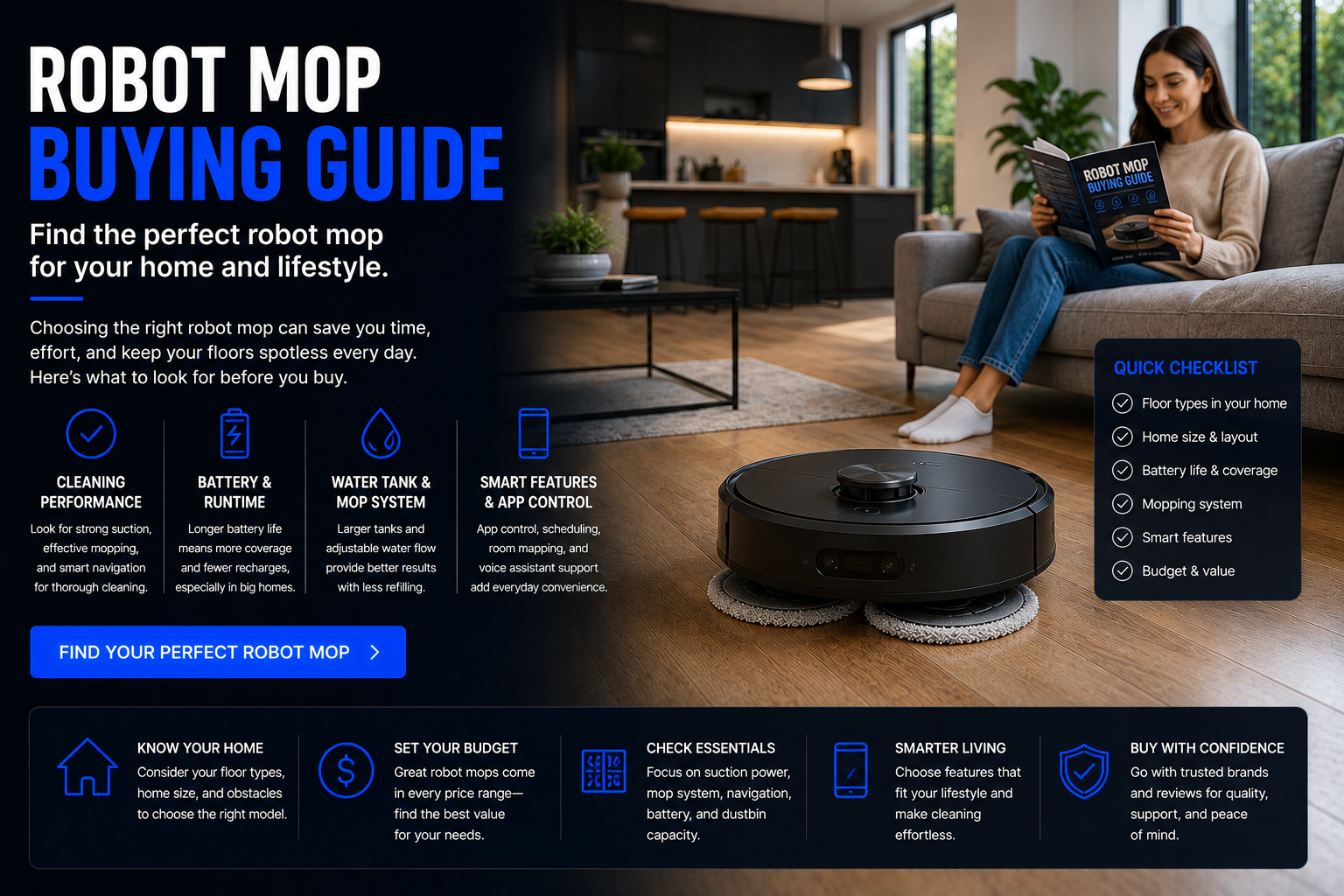
How Do You Choose the Best Robot Mop?
To choose the best robot mop, start with your floor type, then decide whether you need a mop-only robot, a robot vacuum and mop combo, or a self-cleaning robot mop with an automatic dock. A small apartment with tile floors may only need a simple robot mop, while a large home with pets, rugs, and multiple hard-floor rooms usually needs stronger mapping, better suction, carpet detection, longer battery life, and easier maintenance.
The most important buying factors are floor compatibility, vacuuming performance, mopping system, water control, navigation, battery life, obstacle avoidance, app controls, dock features, maintenance needs, replacement parts, and long-term value. A robot mop should make your floor routine easier, not create another chore that you stop using after a few weeks.
Robot mops are best for regular hard-floor maintenance. They can help with dust, footprints, pet paw marks, kitchen traffic, crumbs, light residue, and everyday dirt. They are not perfect replacements for deep manual mopping, sticky spills, dirty grout lines, or heavy stains. The right robot mop should fit your expectations before you buy.
Robot Mop Buying Guide
Choose the Right Type of Robot Mop
There are three main types of robot mops: mop-only robots, robot vacuum and mop combos, and self-cleaning robot mops. Mop-only robots are usually simpler and cheaper. Robot vacuum and mop combos are better for most homes because they remove dry debris before mopping. Self-cleaning robot mops are the most convenient because the dock can wash mop pads and reduce manual maintenance.
- Mop-only robot: Best for small hard-floor spaces that are already vacuumed.
- Robot vacuum and mop combo: Best for most homes because it handles dry debris and light mopping.
- Self-cleaning robot mop: Best for busy families, pet owners, large homes, and hands-off cleaning.
Match the Robot Mop to Your Floor Type
Robot mops work best on tile, vinyl, laminate, stone, and sealed hardwood floors. If your home has mostly carpet, a robot vacuum may be a better first purchase. If your home has mostly hard floors, a robot mop or robot vacuum mop combo can be very useful for daily maintenance.
For sealed hardwood floors, controlled water flow is important. For tile floors, stronger mop pressure and regular cleaning can help maintain the surface. For laminate or vinyl, avoid over-wetting and choose a robot with adjustable water settings.
Decide How Much Maintenance You Want
Every robot mop requires some maintenance. Basic models need manual mop pad washing, water refills, dustbin emptying, brush cleaning, and filter replacement. More advanced models reduce some of this work with self-emptying docks, self-washing mop pads, mop drying, larger water tanks, and automatic cleaning stations.
If you want the easiest ownership experience, choose a self-cleaning robot mop. If you are comfortable washing pads yourself, a budget robot mop or basic robot vacuum mop combo may be enough.
Check Navigation and Mapping
Navigation is one of the biggest differences between cheap robot mops and better models. Basic robots may move randomly, while advanced models use mapping to clean in organized paths, remember rooms, avoid restricted areas, and clean zones on demand.
If you have a large home, open floor plan, multiple rooms, rugs, furniture, or pets, mapping is worth prioritizing. Smart mapping can make the robot mop more efficient, more predictable, and less frustrating.
Look at Vacuuming Power
For most homes, vacuuming performance matters as much as mopping. A robot should remove crumbs, dust, pet hair, litter, and debris before dragging a wet mop pad across the floor. This is why many shoppers choose robot vacuum and mop combos instead of mop-only robots.
Pet owners should especially look for strong suction, easy-to-clean brushes, washable filters, edge cleaning, and self-emptying features if available.
Compare the Mopping System
Not all robot mops clean the same way. Some simply drag a damp pad across the floor, while others use vibrating pads, spinning mop pads, downward pressure, or self-washing systems. Stronger mopping systems usually perform better on dried footprints, kitchen residue, and high-traffic areas.
For light maintenance, a basic damp pad may be enough. For bigger homes, pets, kids, or frequent messes, stronger mopping technology is usually worth considering.
Check Carpet and Rug Protection
If your home has rugs or carpet, carpet protection is important. Look for carpet detection, mop lifting, no-mop zones, no-go zones, and app controls that let you keep wet mop pads away from soft surfaces.
Cheaper robot mops may require physical barriers or manual setup to avoid rugs. More advanced models can detect carpet and adjust automatically.
Think About Battery Life and Home Size
Small homes and apartments may only need moderate battery life. Large homes need longer runtime, efficient navigation, and recharge-and-resume cleaning. Recharge-and-resume allows the robot to return to the dock, recharge, and continue cleaning where it left off.
If your home has multiple rooms or large hard-floor areas, battery life and cleaning efficiency should be major buying factors.
Robot Mop Types Compared
| Type | Best For | Main Benefit | Possible Downside |
|---|---|---|---|
| Mop-Only Robot | Small hard-floor areas | Simple and affordable | Does not vacuum debris first |
| Robot Vacuum and Mop Combo | Most homes | Vacuums and mops in one device | Still needs pad and brush maintenance |
| Self-Cleaning Robot Mop | Hands-off cleaning | Washes mop pads automatically | Higher price and larger dock |
| Budget Robot Mop | First-time buyers | Lower upfront cost | Fewer smart features |
| Premium Robot Mop | Large homes, pets, busy families | Better navigation and automation | More expensive replacement parts |
Best Robot Mop Features to Look For
Smart Mapping
Smart mapping helps the robot understand your home, clean in organized paths, and support room-by-room cleaning.
Adjustable Water Flow
Water control helps protect sensitive floors and lets you customize cleaning for tile, vinyl, laminate, or sealed hardwood.
Strong Suction
Vacuuming before mopping improves results by removing dirt, pet hair, crumbs, and debris from the floor.
Self-Cleaning Dock
A self-cleaning dock can wash mop pads, collect dirty water, dry pads, and reduce manual maintenance.
Carpet Detection
Carpet detection, no-mop zones, and mop lifting help prevent wet pads from touching rugs or carpet.
App Scheduling
App controls allow you to schedule cleanings, choose rooms, set zones, adjust water, and manage cleaning routines.
Robot Mop Buying Recommendations by Home Type
Small Apartments
Small apartments can often use a budget robot mop or simple robot vacuum and mop combo. Mapping is helpful, but not always required if the layout is simple.
Large Homes
Large homes should prioritize smart mapping, recharge-and-resume, longer battery life, room-by-room cleaning, larger water capacity, and self-cleaning dock options.
Homes with Pets
Pet homes should focus on strong suction, easy brush cleaning, self-emptying if possible, washable filters, mop pad cleaning, and strong maintenance support.
Homes with Kids
Families with kids should look for robot mops that can handle crumbs, footprints, kitchen traffic, spills, and frequent scheduled cleaning.
Homes with Mostly Hardwood
For sealed hardwood, choose a robot mop with controlled water flow, no-mop zones, and gentle cleaning settings. Avoid robots that over-wet floors.
Homes with Rugs
If your home has rugs, prioritize carpet detection, mop lifting, virtual barriers, or app-based no-mop zones.
Budget vs Premium Robot Mops
Budget robot mops are best for simple floor maintenance, smaller homes, light mopping, and first-time buyers. They usually cost less but may have weaker navigation, smaller tanks, fewer app features, and more manual maintenance.
Premium robot mops are better for large homes, pets, busy families, and users who want more hands-off cleaning. They may include self-cleaning docks, mop drying, self-emptying dustbins, better obstacle avoidance, stronger suction, room-by-room mapping, and more advanced carpet protection.
The best value is not always the cheapest option. A robot mop that fits your home and gets used regularly is usually more valuable than a cheaper model that constantly gets stuck, misses rooms, or requires too much maintenance.
Robot Mop vs Robot Vacuum
A robot vacuum removes dry debris such as dust, dirt, crumbs, and pet hair. A robot mop wipes hard floors with a damp pad or mopping system. A robot vacuum and mop combo does both, which makes it the most practical choice for many homes.
If your home has mostly carpet, start with a robot vacuum. If your home has mostly hard floors, a robot mop or vacuum-mop combo may be more useful. If your home has both carpet and hard floors, look for a combo robot with strong carpet detection and no-mop zones.
Robot Mop Mistakes to Avoid
- Buying only by price: The cheapest robot mop may not have the navigation or maintenance features your home needs.
- Ignoring floor type: Hardwood, tile, vinyl, laminate, carpet, and rugs all require different features.
- Skipping mapping in a large home: Random-navigation robots can struggle with larger layouts.
- Expecting deep cleaning: Robot mops are best for maintenance, not heavy scrubbing.
- Forgetting replacement parts: Mop pads, filters, brushes, and dock supplies affect long-term ownership.
- Ignoring dock size: Self-cleaning docks can be large and need proper space near an outlet.
- Using the wrong cleaning solution: Many robot mops require water or approved solutions only.
Are Robot Mops Worth It?
Robot mops are worth it for many homes because they reduce routine floor cleaning and make hard-floor maintenance easier. They are especially useful for tile, vinyl, laminate, sealed hardwood, kitchens, bathrooms, hallways, pet areas, and high-traffic rooms.
They are not perfect. A robot mop will not always remove sticky spills, heavy stains, dirty grout, or dried messes. You may still need manual deep cleaning. But for daily and weekly floor maintenance, a good robot mop can save time and keep floors looking cleaner between deeper cleanings.
The key is choosing the right model for your home. A small apartment may only need a budget robot mop, while a large home with pets may need a premium self-cleaning robot vacuum and mop combo.
Future of Robot Mops
Robot mops are becoming more advanced as home robotics moves toward smarter automation. Future robot mops may include better stain detection, stronger AI obstacle recognition, improved mop pressure, automatic cleaning solution dosing, smarter water control, quieter docks, better edge cleaning, and stronger smart home integration.
Over time, robot mops may work more closely with AI home robots, home assistant robots, robot vacuums, robot air quality systems, and home monitoring robots. Instead of cleaning only on a schedule, future systems may respond to room traffic, spills, pets, air quality, weather, and household routines.
For homeowners, this means robot mops are likely to become more useful, more autonomous, and easier to own as the technology improves.
Related Robot Mop Guides
Related Home Robot Guides
Robot Mop Buying Guide FAQ
How do I choose the best robot mop?
Choose a robot mop based on your floor type, home size, pets, rugs, budget, navigation needs, maintenance preferences, and whether you want a mop-only robot, vacuum-mop combo, or self-cleaning robot mop.
Is a robot vacuum and mop combo better than a robot mop?
For most homes, yes. A robot vacuum and mop combo can remove dry debris before mopping, which usually produces better results than mopping alone.
Are self-cleaning robot mops worth it?
Self-cleaning robot mops are worth it if you want less manual maintenance, cleaner mop pads, and a more hands-off floor-cleaning routine.
Do robot mops replace manual mopping?
Robot mops can reduce manual mopping, but they may not fully replace deep cleaning for sticky spills, heavy stains, grout lines, or dried messes.
Can robot mops clean hardwood floors?
Many robot mops can clean sealed hardwood floors, but you should use controlled water settings and follow your flooring manufacturer’s care instructions.
Can robot mops clean tile floors?
Yes, tile is one of the best surfaces for robot mops. Stronger mop pressure and regular cleaning can help maintain tile floors.
Do robot mops work on laminate floors?
Many robot mops can work on laminate floors, but avoid over-wetting and choose a model with adjustable water flow.
Do robot mops avoid carpet?
Some robot mops include carpet detection, mop lifting, no-mop zones, or app-based barriers. These features are important if your home has rugs or carpet.
How often should I run a robot mop?
Many homeowners run a robot mop several times per week. Homes with pets, kids, kitchens, and high-traffic floors may benefit from daily cleaning.
Do robot mops need cleaning solution?
Many robot mops are designed for water only or manufacturer-approved cleaning solutions. Always follow the instructions for your specific model.
How much should I spend on a robot mop?
The right budget depends on your needs. Basic models cost less, while premium models with mapping, self-cleaning docks, strong suction, and mop drying cost more.
What features matter most in a robot mop?
The most important features are floor compatibility, vacuuming power, mopping system, water control, mapping, battery life, carpet protection, maintenance needs, and replacement part availability.
Shop Robot Mops
The best robot mop should match your floors, home size, cleaning needs, and maintenance preferences. Compare robot mops, robot vacuum and mop combos, self-cleaning robot mops, mapping features, dock systems, and smart home controls before choosing the right model for your home.
Shop Robot Mops